The Gentle Hills of Easy-going Umbria Invite Exploration & Relaxation

The Gentle Hills of Easy-going Umbria Invite Exploration & Relaxation

The Gentle Hills of Easy-going Umbria Invite Exploration & Relaxation

August 14, 2020

The Gentle Hills of Easy-going Umbria Invite Exploration & Relaxation
The Gentle Hills of Easy-going Umbria Invite Exploration & Relaxation

Rather unspoiled by mass tourism, Umbria is an unassuming region of gentle hills commanding valley views, hill towns steeped in history and art, and kitchens serving wonderful meals with prized local gastronomic products like truffles and sausage. One of Italy’s few landlocked regions. and, with not even 1 million residents, one of its least populated, Umbria is too often overlooked by visitors bound for its better-known neighbor Tuscany.

But people in the know have long looked to Umbria for relaxing retreats and its pervasive air of gentleness. Many Romans have weekend homes there, and expats a few decades ago started buying up farmhouses near charming Umbrian towns like Todi, with its remarkably intact medieval historic, adding swimming pools to villas overlooking peaceful valleys and shopping for ingredients for local dishes their friendly neighbors have taught them to prepare.

While the region has no big urban centers exercising gravitational pulls on tourists -- like Florence or Venice or Naples -- Umbria’s towns invite days of slow-paced exploration.

Perhaps in keeping with Umbria’s easy-going character, three of its towns are particularly associated with peace or openness. Followers of this newsletter might recall our portrait of Assisi, the tranquil hill town with a mystical air and imbued with a spirit of simplicity and welcome befitting its namesake saint. That its basilica is home to Giotto frescoes, some of the art world’s most acclaimed works, enriches any sojourn there.

Then there is Perugia, famed for its university which draws foreigners from around the world and awes visitors with a 13th-century exquisitely carved fountain in a main square. Another Umbrian town of world renown is Spoleto, celebrated for its Festival of Two Worlds, with early summer offerings of music, dance and theater. The festival was begun in the 1950s by composer Gian Carlo Menotti with the goal of connecting the artistic and cultural worlds of Europe and the United States. Like so many of Umbria's towns, Spoleto has ancient Roman roots and fine medieval architecture, and, in its case, the fame of once having repelled an attack by Hannibal. Spoleto's Bridge of the Towers, an Italian landmark, crosses a deep ravine.

Another magical name in Umbria is Narni, a medieval town with vistas of castles on surrounding hills. The town boasts that its setting inspired C.S. Lewis' "The Chronicles of Narnia." With roots dating back more than 2,500 years, Narni's attractions include an ancient Roman domus, or residence and aqueduct.

While not as famed as Assisi, Narni is the birthplace of two saints -- twin siblings Benedict and Scholastica -- has a 16th-century castle and a gourmand's reputation for its prosciutto and black truffles, which top pasta, or is worked into a pate as an excellent spread for local bread.

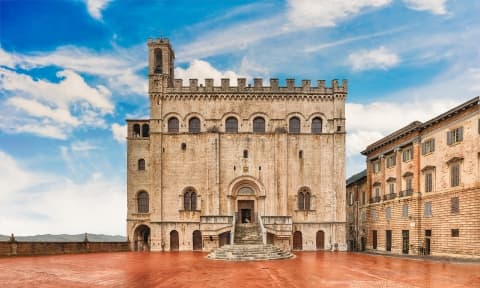
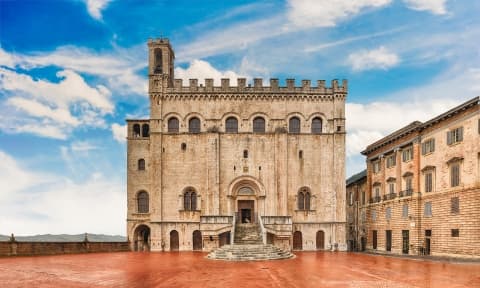
And who could resist such as charmingly named town as Gubbio? Its ancient Roman theater is the venue for summer performances of the classics, while the town is popular with Italian visitors for its annual pageantry dating to medieval times.

For many tourists, Umbria means a day-trip to Orvieto from Rome. While easily reachable from Rome, the riverside Orvieto deserves a leisurely visit. Why rush through a town famed for its white wine and splendid decorative pottery? Orvieto's star attraction is a Gothic-style cathedral, imposing in its perch on a bluff. In the countryside outside Orvieto is a spectacular inn with origins as a Benedictine monastery.

Many of Umbria's most delightful sights are in hamlets and village a few miles outside the region's more visited towns. These are well worth an afternoon's detour, for it's in these off-the-main-path places where one frequently happens upon churches with stunning art and can savor some hearty Umbrian fare in a countryside trattoria or perhaps at an innkeeper's lunch table.

For a break from Umbria's magnificent art and churches, Umbria offers many possibilities to enjoy nature. Walks in the woods abound, and the region is home to one of Italy's much-visited waterfalls.
The Gentle Hills of Easy-going Umbria Invite Exploration & Relaxation

October 29, 2022

The Gentle Hills of Easy-going Umbria Invite Exploration & Relaxation

Rather unspoiled by mass tourism, Umbria is an unassuming region of gentle hills commanding valley views, hill towns steeped in history and art, and kitchens serving wonderful meals with prized local gastronomic products like truffles and sausage. One of Italy’s few landlocked regions. and, with not even 1 million residents, one of its least populated, Umbria is too often overlooked by visitors bound for its better-known neighbor Tuscany.


But people in the know have long looked to Umbria for relaxing retreats and its pervasive air of gentleness. Many Romans have weekend homes there, and expats a few decades ago started buying up farmhouses near charming Umbrian towns like Todi, with its remarkably intact medieval historic, adding swimming pools to villas overlooking peaceful valleys and shopping for ingredients for local dishes their friendly neighbors have taught them to prepare.

While the region has no big urban centers exercising gravitational pulls on tourists — like Florence or Venice or Naples — Umbria’s towns invite days of slow-paced exploration.

Perhaps in keeping with Umbria’s easy-going character, three of its towns are particularly associated with peace or openness. Followers of this newsletter might recall our portrait of Assisi, the tranquil hill town with a mystical air and imbued with a spirit of simplicity and welcome befitting its namesake saint. That its basilica is home to Giotto frescoes, some of the art world’s most acclaimed works, enriches any sojourn there.

Then there is Perugia, famed for its university which draws foreigners from around the world and awes visitors with a 13th-century exquisitely carved fountain in a main square. Another Umbrian town of world renown is Spoleto, celebrated for its Festival of Two Worlds, with early summer offerings of music, dance and theater. The festival was begun in the 1950s by composer Gian Carlo Menotti with the goal of connecting the artistic and cultural worlds of Europe and the United States. Like so many of Umbria’s towns, Spoleto has ancient Roman roots and fine medieval architecture, and, in its case, the fame of once having repelled an attack by Hannibal. Spoleto’s Bridge of the Towers, an Italian landmark, crosses a deep ravine.

Another magical name in Umbria is Narni, a medieval town with vistas of castles on surrounding hills. The town boasts that its setting inspired C.S. Lewis’ “The Chronicles of Narnia.” With roots dating back more than 2,500 years, Narni’s attractions include an ancient Roman domus, or residence and aqueduct.

While not as famed as Assisi, Narni is the birthplace of two saints — twin siblings Benedict and Scholastica — has a 16th-century castle and a gourmand’s reputation for its prosciutto and black truffles, which top pasta, or is worked into a pate as an excellent spread for local bread.

And who could resist such as charmingly named town as Gubbio? Its ancient Roman theater is the venue for summer performances of the classics, while the town is popular with Italian visitors for its annual pageantry dating to medieval times.

For many tourists, Umbria means a day-trip to Orvieto from Rome. While easily reachable from Rome, the riverside Orvieto deserves a leisurely visit. Why rush through a town famed for its white wine and splendid decorative pottery? Orvieto’s star attraction is a Gothic-style cathedral, imposing in its perch on a bluff. In the countryside outside Orvieto is a spectacular inn with origins as a Benedictine monastery.

Many of Umbria’s most delightful sights are in hamlets and village a few miles outside the region’s more visited towns. These are well worth an afternoon’s detour, for it’s in these off-the-main-path places where one frequently happens upon churches with stunning art and can savor some hearty Umbrian fare in a countryside trattoria or perhaps at an innkeeper’s lunch table.

For a break from Umbria’s magnificent art and churches, Umbria offers many possibilities to enjoy nature. Walks in the woods abound, and the region is home to one of Italy’s much-visited waterfalls.


Read Article
Fit for Emperors & Popes

October 29, 2022

Fit for Emperors & Popes

First Roman emperors, then pontiffs. Throughout the ages, when the powerful and the privileged wanted to escape the summer heat of Rome, they headed for their villas in the hills — the Alban Hills, that is, southeast of Rome. Contemporary citizens of Rome still follow that tradition, flocking to the hill towns known collectively as the Castelli Romani (Roman Castle towns), or more simply, I Castelli, for cooling breezes, fine wines and panoramic views.

Visitors in Rome in the summer months would be wise to take the Romans’ lead and consider taking a day trip — or making an evening of it — by dining in the historic centers of quaint towns or strolling near scenic lakes.

While relaxing vibes and centuries of history permeate the Castelli Romani, each town boasts its own charm, gastronomic specialties and eagerly awaited annual festivals known as sagre.


Read Article
Rome is big on Baroque

October 29, 2022

Rome is big on Baroque

Rome is a city where art and history flow seamlessly together. The grandeur of its Baroque masterpieces is undeniable—ornate, marble-adorned Jesuit churches near Piazza Venezia, Bernini’s monumental fountain in Piazza Navona, and Borromini’s intricate designs all serve as bold testaments to an era that celebrated drama and opulence. Equally compelling is the city’s Renaissance heritage, where the refined elegance of Raphael’s wall paintings in the Vatican Museums and the sublime beauty of Michelangelo’s frescoed ceiling and altar in the Sistine Chapel evoke a time of artistic innovation and humanism.

Beneath these celebrated layers, Rome holds a quieter medieval legacy. In neighborhoods such as Monti and the Old Ghetto, subtle traces of medieval art and architecture emerge amid the modern hustle. Recent archaeological discoveries—unearthing walls and foundations of a long-forgotten housing complex during a subway expansion near Piazza Venezia—offer a rare glimpse into everyday life from centuries past.

For those seeking to immerse themselves fully in medieval charm, a day trip to Viterbo is a rewarding escape. This walled town, home to about 65,000 residents who take immense pride in their heritage, is also known as a “city of popes.” Viterbo’s imposing papal palace once housed five pontiffs, while its medieval quarter—particularly in the San Pellegrino neighborhood—delights with winding cobblestone streets, homes crafted from deep gray peperino stone, and stone lions that echo the town’s ancient symbol.

One unforgettable chapter in Viterbo’s history unfolded during a conclave from 1268 to 1271. In a bid to hasten the cardinals’ decision, locals reduced the electors’ comforts—serving only bread and water and even removing the palace roof so that the cardinals had to take shelter under a tent. Such dramatic measures not only sped up the election process but also underscored the town’s enduring spirit. Even today, traditions like St. Rosa’s feast day on September 3—when locals don white outfits accented with red waistbands and hoist a towering “macchina” in a procession dating back to the 13th century—remind visitors of Viterbo’s vibrant, living history.

In both Rome and Viterbo, history is not confined to textbooks or museums—it is woven into the very fabric of daily life, inviting you to explore a landscape where every street and stone tells a story.

Read Article
Western Sicily offers tastes of many civilizations that left their mark -- and their cuisine's traditions -- on the island

December 6, 2022

Western Sicily offers tastes of many civilizations that left their mark -- and their cuisine's traditions -- on the island

If you don't make it in time for this summer's street food festival in Trapani, a Sicilian port town, which will be cooking up the likes of mixed fish fries, boiled octopus, rice balls and tripe panini, not to fret. In early fall, the beach town of San Vito Lo Capo, a short drive away, will host its annual international couscous festival. Can't make it to that event? No worry again. It's never difficult to find some gastronomical feast this corner of Sicily. Occasions abound here to sample the legacy of the many layers of civilizations and cultures that have made the Mediterranean island such a fascinating place.

Trapani makes for a lively, logical base for exploration of the western end of Sicily, where the influence of past Arab rulers is strongly felt in the region's fondness for couscous, frequently made with fish, or golden raisins and pine nuts.

Indeed, the venue for Trapani's 10th street food festival, called Stragusto (roughly translated: super-taste), is the picturesque Fish Market Piazza, which is just what it sounds: a large, bustling square filled with vendors selling fish. The food festival highlights local dishes but also those famed from other parts of the island, including from the capital, Palermo, and from Catania, Palermo's rival in the east and especially proud of its sweets like cannoli or cassata, arguably the island's most celebrated cake. Other sub-specialties of Sicilian cooking derive from treasured islands prepared on the many tiny islands near Sicily. The island's wines, red and white, recently gaining in deserved popularity abroad, are perfect for washing down the nibbles.

With Trapani highlighting delectable food, visitors can do well to seek out modest-looking trattorie where locals are dining, perhaps some plain place with the TV set on showing a soccer match. Trapanese-style sauce can be so full-bodied and tasty, it's good even without the pasta. A variation on pesto, one interpretation of this recipe features almonds, basil leaves and garlic ground together and mixed with tomatoes and grated pecorino cheese.

From Trapani's port, ferries regularly ply the short distance to the Egadi Islands. The main island, Favignana is proud of its excellent fish restaurants. Whether on a day trip to Favignana, or during a longer stay, the island offers an opportunity to swim in coves with crystal-clear waters or to rent bikes to see the island, while stopping now and then to marvel at gardens of citrus trees and flowers, which, to protect them from frequent winds, are planted far below street level, in deep pits with tall walls built from local tufa stone. To relax, try a fresh-fruit icy granita in the island's main square, where the friendly inhabitants love to congregate.

In the Trapani area, the drive along the sea windmills come into view. Known as the "Via del Sale" (The Salt Road), the drive is highlighted by six-bladed windmills that are part of the environmentally protected area where flamingos congregate. Time the drive to around sunsets as you look to the west.

In Trapani, the National Pepoli Museum, once was a Carmelite convent, features beautiful cloisters. The archaeological collection includes artifacts from the ancient temples of Selinute and the nearby island of ancient Motya.

Called Mozia in Italian, Motya was a strategic Pheonecian city dating back some 2,800 years. In ancient times there was a causeway inking the tiny island to the Sicilian "mainland." Today a short boat ride takes visitors to San Pantaleo island, where excavations, including the remains of ancient houses and gates can be seen. A museum on the island is home to some of the archaeological finds and strolling Mozia and imagining how it was in times lost is a popular excursion for tourists in western Sicily.

More renowned are two ancient Greek cities in western Sicily. Brutal rivals in ancient times, Selinus -- Selinunte in modern times -- and Segesta each vie for tourist attention and both are striking in their own ways.

Colonized in likely the 7th century B.C., Selinunte was the westernmost of Greek colonies, and boasting an acropolis overlooking the Mediterranean. Groups of temples make for romantic strolls, and the archaeological park isn't usually overrun with tourists, making the atmosphere even more enchanting, although most of the temples themselves were felled by earthquakes in centuries past.

Selinunte's secrets are still coming to light. Excavations a decade ago revealed a 6th-century paleo-Christian baptistery, where baptism was performed by immersion. Other excavations found thousands of votive figures at an ancient sanctuary.

Segesta is also striking for its location. Suddenly, as you drive down one of Sicily's often uncrowded highways and there looming in view, atop a hill, appears a majestic, open-air ruin. Segesta is thought to have been settled some 3,000 years ago by people of mixed Trojan and Greek descent. In its years as a Hellenic city, it was a war rival of Selinus and later an ally of powerful Carthage, and still later allied itself with ancient Rome. It met its end at the hands of the Saracens, one of the many conquerors that Sicily has endured across history.

The site's unfinished temple, with dozens of unfluted columns, is considered one of the finest existing monuments in Doric architectural style.

Read Article
Fit for Emperors & Popes

October 29, 2022

Fit for Emperors & Popes

Rome's Castelli towns make for relaxing getaways from the city

First Roman emperors, then pontiffs. Throughout the ages, when the powerful and the privileged wanted to escape the summer heat of Rome, they headed for their villas in the hills -- the Alban Hills, that is, southeast of Rome. Contemporary citizens of Rome still follow that tradition, flocking to the hill towns known collectively as the Castelli Romani (Roman Castle towns), or more simply, I Castelli, for cooling breezes, fine wines and panoramic views.

Visitors in Rome in the summer months would be wise to take the Romans’ lead and consider taking a day trip -- or making an evening of it -- by dining in the historic centers of quaint towns or strolling near scenic lakes.

While relaxing vibes and centuries of history permeate the Castelli Romani, each town boasts its own charm, gastronomic specialties and eagerly awaited annual festivals known as sagre.

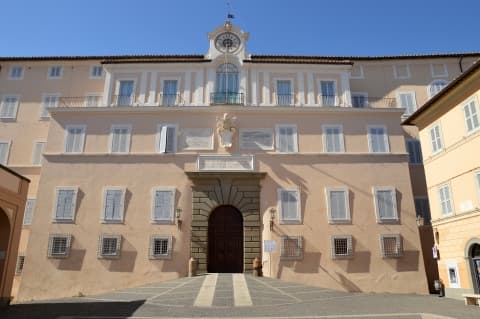
Perhaps the best-known town is Castel Gandolfo because it hosts the papal summer palace, which, being property of the Holy See, enjoys extraterritorial status. Pope John Paul spent much of his summers there, helicoptering it to Rome for papal appointments. During the summer, the faithful and the curious could see the pontiff, close up, by crowding into the palace courtyard for the traditional Sunday noon greeting.

The current pope, Francis, hasn’t kept up the habit of summering in the Castelli, although visitors might be surprised. One recent sizzling day in Rome, the retired pope, Benedict XVI went to the papal palace to stroll in its manicured gardens, then headed to dinner in another town, Rocca di Papa, aptly named “The Pope’s Rock.’’

While associated with popes, Castel Gandolfo, which sits just above Lake Albano, has history going back thousands of years. It is perched on the site of Alba Longa, founded, according to legend, some 500 years before Rome's own beginnings. Indeed the sprawling papal estate was constructed on the ruins of the Villa of Domitian, one of the earlier ancient Roman emperor.

During the 1960 summer Olympics, canoeing events were held on the lake. Depending on the season, tourists can rent canoes, pedal boats or swim in the lake, considered the deepest lake of volcanic origin in Italy.

While the main square of the town can be a bit touristy, due to souvenir shops linked to Castel Gandolfo’s Vatican ties, other Castelli towns seem almost quaint and tranquil, like Lanuvio, which Lanuvio features a medieval section with steep streets.

Nemi is a tiny town along its own lake and famed for its strawberries. When the berries are ripe for the picking, in May and June, Romans join locals for festivals celebrating the fruit, which is enjoyed in simple dishes. Instead of dotting cakes, strawberries star on their own, sliced in bowls and topped with a little sugar, gelato, or lemon juice.

Besides the delicious fruit, Nemi is also noted for archaeological discoveries. Caligula had ships built in tribute to Diana the goddess, whose temple’s reflection could be seen on the waters.

Genzano has two popular town festivals. One is held in connection with the religious feast day of Corpus Christi. Over several days, the main is strewn with petals, forming a kind of design that looks like a carpet of flowers. On the Monday after the weekend festival, the local children get to run down the street, gleefully crushing the petals with their feet.

In late summer-early fall, Genzano celebrates its renowned bread with a festival. Crusty on the outside, soft on the inside, the bread is delivered freshly baked daily to many bakeries in Rome, which put up signs in their windows like “Pane di Genzano Oggi’’ (Genzano bread today.) There are town rivalries over which has the best bread -- another hill town Lariano’s bread is also found in fine bakeries in Rome.

If you want to make sandwiches out of your tasty Genzano loaf, head to Ariccia for some slices of porchetta, or roast pork, a favorite in many Roman delis.

The Castelli are toasted for their wines, which enjoy specially bestowed designations from the European Union indicating they were produced from local grapes. The area’s soil, of volcanic origin, is often cited for the success of its vineyards. While reds and rose’ wines are produced, the most celebrated Castelli wines are its whites, with their characteristic straw-yellow color. They are well-suited to accompany hearty Roman pasta dishes.

The wines’ excellent reputation is ancient. The wines produced on the estates of the Roman emperors who holidayed in the Castelli were considered among the best in the empire. Towns closely identified with their wines include Frascati, Marino, and Velletri. No surprised, there are also festivals centered around the grape harvests.

Read Article
Italy's Museums Connect with Art Lovers

March 2, 2021

Italy's Museums Connect with Art Lovers

with cooking lessons inspired from still life and "guided" virtual gallery tours

She's modest and seductive and catching a lot of looks. Botticelli's "Birth of Venus” this year notched more than 600,000 followers on Instagram. Helping to boost one of the Uffizi Galleries iconic paintings' online popularity was a photo of the masterpiece featuring fashion and styles influencer Chiara Ferragni, who visited the Florence art museum.

The Galleries' director likened the Uffizi's presence on the social media channel to a kind of window on the world, and indeed, Italy's museum art venues are throwing open their doors “virtually” while the pandemic complicates travel and puts tourist in-person visits on hold. These initiatives offer a fun way to "explore” the treasures of a museum you might not be immediately able to visit and can aid planning for when you do come -- which wing? which floor? which museum? which theme?

To no surprise, these art-lovers venues are enthusiastically showing off their collections with artistry and creativity.

Curious about the Uffizi's "storeroom" chock full of artworks there is no room for upstairs? On the Uffizi website, one can click on a window and the manager of the storeroom, known as a “magazzino” in Italian, will show how and what's arranged inside.

That is just one of multiple "windows" you can open to watch narrated videos describing different periods or collections of the Uffizi. It's like having a "virtual" private tour. The Uffizi thankfully offers a selection of videos narrated by English-speaking experts. (There are Spanish-speaking ones, and, of course, Italian.)

Remember to check out museum websites' links to the likes of Twitter and especially Facebook. Starting in January this year, and for a series of Sundays, the Uffizi was featuring an art-gastronomy video to follow. Inspired by say, a still life of fruit and game birds, prominent Italian chefs prepare a dish, with the recipe and the history of the painting written down for background. The recipe is in Italian, but with a bit of dictionary help and metric conversion, you can create an artful dish. One recent offering featured a two-star chef from Tuscany whipping up truffles, red cabbage, and a game bird sizzling in a stove pan, in her culinary interpretation of a 1624 still life by Jacopo Chimenti. The series has the appetizing label uffizidamangiare (Uffizi-to-eat.)

Without leaving your couch you can dash up to the venerable Brera in Milan. With a click, you could be listening to pianist Clive Britton playing Liszt's "Sposalizio" as the video camera pans wonderful details of Raphael's "Sposalizio della Vergine” (Marriage of the Virgin). The Hungarian composer was inspired to create the work after he saw the painting during an 1837 visit to the Brera. It's all part of an e initiative called "Brera Listens."

Stay tuned to an upcoming edition of this newsletter to learn about some of the exciting recent discoveries archaeologists have made at Pompeii. But, meanwhile, for a sampling of what awaits visitors to one of Italy's most visited cultural sites, you can "stroll" through Pompeii's newly inaugurated museum of some of the artifacts, statues, and frescoes that have been unearthed over the years and now have a new home.

For a whimsical peek into Italy's museum world, "tour” the clever website of GNAM. That's the Italian acronym for Rome's National Gallery of Modern Art. Contemporary and modern art isn't frequently associated with the ancient city. But the last few years have seen GNAM grow in visitor appeal, thanks to its new, young, bold director, Cristiana Collu. GNAM's website recently was playing off the animal theme. It highlights the connection the museum hopes to have with the city and its visitors -- there's a shot of the No. 3 tram which glides by the gallery just as some of Rome's wild green parrots flit through treetops. A series of videos, narrated by an Italian biologist and animal behavior expert, synchs with artistic renditions of the animal world. Happily, the Italian narration has English subtitles.

Read Article
Off the Beaten Trail and onto Nature's

March 2, 2021

Off the Beaten Trail and onto Nature's

Italy's national parks appeal to hikers, cyclists, horseback riders, and wildlife lovers alike

Many cities and towns in Italy that tourists visit are near the sea or up in the hills. But much of Italian land is mountainous and sparsely populated, with miles and miles of hiking paths, horse trails or back roads, perfect for getaways to commune with nature and peacefully observe wildlife.

While many conjure up visions of chalets or posh ski resorts in the Alps when mountains are mentioned in Italy, the nation's "other" mountain range -- the Apennines, which form the backbone of the peninsula -- are popular with Italians seeking fresh air and active vacations in national parks.

One cherished destination is the National Park of the Gran Sasso and Laga Mountains. Spread across three central regions -- Abruzzo, Marche, and Lazio -- the park boasts the highest peak in the Apennines -- Corno Grande, or Big Horn -- which towers nearly 10,000 feet high. The park also includes Europe's southernmost glacier, known as Calderone.

The park likens itself to a "monument to biodiversity," with more than 2,300 recorded kinds of flora. Wildlife abounds, too, in the protected terrain of the park, including animals that were re-introduced to the area, notably the goat-like, majestic chamois, which is the park's symbol, and which now numbers some 500. The park is home to the Apennine wolf. Wildcats, badgers, polecats, and porcupines also make their abode there.

The topography is varied, too: forests, rivers, waterfalls, lakes, prairies, and plateaus are all within the park's embrace. Suggested trails stretch for miles between scattered hamlets, abandoned castles and watermills, and, from earlier centuries, temples and necropolises. Visitors can hike or ride mountain bikes or horses to navigate among the natural beauty. A mountain-bike route rings the base of Gran Sasso. Some 200 miles of bridle trails are available, with stalls and water troughs to shade horses on hot days and quench their thirst.

Visitors might find themselves going down the same paths as shepherds and herders covering centuries-old routes. The Italian Alpine Club -- CAI -- which despite its name is present throughout all of Italy, not just the Alps, to encourage and assist hiking and other outdoor activity -- has more than a dozen mapped trails.

The park is mainly frequented in spring, summer, and fall, but some hardy excursionists equipped with skies or crampons do venture in during winter. Towns on the park's outskirts that can serve as "base camps" with rented rooms, rustic hotels or inns, are proud to serve dishes prepared with locally grown ingredients. Truffles, chestnuts, cheese from sheep, and recipes featuring boar and blueberry sauce are area favorites. Reflecting life lived on farms, ranches, or near the woods, the fare leans toward the hardy -- bean soups, olives stuffed with a mix of veal, port, and turkey, and pasta often topped by meat sauces, including ones chock full of locally-made sausage.

For a protected swath of nature many Italians haven't yet visited, Pollino National Park, straddling two regions, Basilicata and Calabria, in the Apennines southern end, fits the bill. Created and given protected status by the Italian Parliament only in the 1990s, the park spans across the "instep" section of the boot-shaped peninsula, from the Ionian to the Tyrrhenian Seas.

Here outdoor life is even more active than what is offered in the Gran Sasso parkland. Pollino National Park is a favorite for those who want to river-raft, rock-climb, or trek. Thick forests and steep canyon mark the park, and horseback riding is popular. Because the area is remote, rugged, and not that frequented, the park recommends for safety going with local guides, who visitors can meet up within towns around the park. The guides are available for day trips or overnight stays.

The towns near Pollino National Park, many of them with only a couple hundred inhabitants include some of the Italian south's more unusual ones. In a handful of hamlets, the locals speak Albanian, reflecting their heritage from Albanians, who, fleeing several centuries ago from Ottoman armies, took refuge in the mountain areas. Among these is San Paolo Albanese, where, on the feast day of St. Rocco, on Aug. 16, townspeople don costumes in a blaze of color. Earlier generations made similar garments from cloth woven from the fibers of the broom plant, whose yellow blossoms are an abundantly cheerful sight in the Italian south.

Read Article
In big cities and small towns, opera houses draw locals and tourists whatever the season

December 18, 2020

In big cities and small towns, opera houses draw locals and tourists whatever the season

The appeal of opera is so universal, opera-goers flock to theaters to enjoy performances in languages they might not understand. Soaring notes from the orchestra, elaborate staging, evocative scenery, booming chorus numbers, and, of course, amazing vocal ranges of the divas can transcend most any language barrier.

Many operas have been composed by Italians -- Verdi, Puccini and Rossini, to name three notables -- so, no surprise opera performances are especially popular in Italy. Even modest-size cities and towns boast opera theaters, and tickets to their season's offerings are eagerly snatched up. Talent isn't lacking -- walk down a street in Italy and it's not rare to hear, in some apartment, a soprano perfecting her trills or a violinist practicing for that evening's performance. Ravenna is the home for the Riccardo Muti Italian Opera Academy, run by the maestro himself.

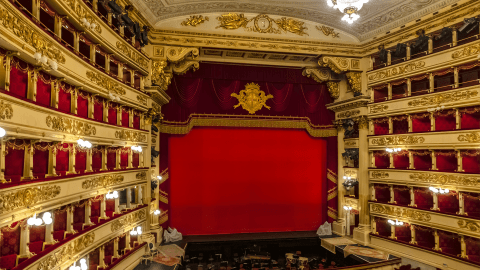
La Scala theater in Milan is the prima donna of Italian opera venues. Its annual gala premiere on Dec. 7 is a glittering occasion for Italian politicians and VIPS from the worlds of entertainment and business to turn out to be seen but also to enjoy the arias of some of the opera world's great composers. Dec. 7 is an official city holiday in Milan, so work appointments can't be an excuse for the Milanese crowd to skip opening night if they can snag a ticket, be it front-row or the stratospheric top tier, a haunt for opera buffs.

This year, La Scala's management tried its hardest to keep the appointment, but the revered cultural tradition in Italy's financial and design capital was forced to bow to the logistics of the pandemic, and it was decided to close the event to the public.

Still, so cherished is La Scala's season opening on Italy's cultural calendar, that the musical event was then planned in the form of concert to be broadcast on national TV that evening. Even without a live audience, such is La Scala's fame that superstar tenors like Placido Domingo and Roberto Alagna were featured on the bill.

But wonderful opera productions can be enjoyed in many venues in Italy that happily mesh music-loving tourists' itineraries.

In a bid to raise its profile, Rome's Teatro dell'Opera several years ago engaged Muti, who had a long-storied tenure as La Scala's music director, as honorary lifetime conductor.

In Venice, La Fenice is that magical city's opera house. La Fenice is Italian for "the phoenix," and, like its namesake, the theater rose from the ashes, sort of. It was rebuilt much along the design of the 1792 original design after a 1996 fire.

If Neapolitans are known for bursting out in song, it's no surprise that that southern, waterfront city is abundantly proud of its opera house, San Carlo. Described as Europe's oldest still functioning opera theater, less than a decade ago it reinvigorated its cultural presence by inaugurating "Memus," a combination museum and historic archives hosted by the city's Royal Palace.

Not to be outshone on southern Italy's opera scene is Palermo's Teatro Massimo. When it was open to the public in 1897, it was considered the third-biggest opera theater in Europe, after those in Paris and Vienna. After a two-decades' long closure for restoration, Teatro Massimo re-opened in 1997, with Claudio Abbado conducting the Berliner Philarmoniker.

With Italy's generally mild summer climate, opera lovers can combine their passion with open-air performances. What could be more romantic than taking in an opera in the ancient arena of Verona, the city of Romeo and Juliet? Looking forward to summer 2021, Verona's Arena is promising several operas, featuring Muti and other conductors, and singers with star power like Jonas Kaufmann, the German tenor.

For more romance, one can take in an "opera under the stars" at Macerata, a small city inland from the Adriatic in the Marche regions. A particularly fun time to go is around Aug. 10, the fabled "night of the shooting stars." In the countryside outside of Macerata, look up to the night sky to try to catch a glimpse of shooting stars zipping by.

One outdoor summer performance in Rome is legendary. In 1990, when Italy hosted the soccer World Cup, Luciano Pavarotti, Placido Domingo and Jose Carreras teamed up for one of opera's most memorable nights, with the trio of tenors performing in the ancient Baths of Caracalla. The archaeological site is a popular summer choice for opera lovers, tourists and Romans alike for its dramatic backdrop. Rome's Teatro dell'Opera offers a rich variety of performances in the enchanting setting amid the ruins.

Read Article
Background image
Best trip ever!
We would like to sincerely thank Carmen and her team for the wonderful two week itinerary planned for us in Italy as well as your dedication and constant communication in keeping us always informed with our tour guides and drivers.
Being that this was our first time traveling to Italy, Your Own Italy made our hotel (beautiful hotels) , transportation, and tour reservations for us which made our trip stress free where we could relax and enjoy our time. All the private drivers and AP Tour Guides were wonderful, gracious, very knowledgeable and informative. We really enjoyed them and learned a lot from them.
Testimonials
Loading...