Scelerisque pulvinar gravida cursus morbi enim faucibus amet. Netus felis ipsum lorem consequat aliquet. Ullamcorper lacus eu morbi purus. Porttitor mauris tincidunt volutpat pharetra scelerisque. Velit non molestie pulvinar aliquam aliquam id libero cras. Mattis ornare egestas at interdum gravida feugiat. Nisi elementum nisl consectetur nec. Et lectus purus gravida tortor consequat cras sit luctus. Nunc feugiat in faucibus dolor. Proin aliquet id nisi quis cursus dignissim facilisis.

When Americans start coming again as tourists to Italy, they will find hoteliers, museum directors and restaurant owners have devised some thoughtful measures to ease visitors back into new routines after stay-at-home situations kept many foreigners out of the country for months.
The first country outside of Asia to be hit in the pandemic, Italy has been very cautious about re-opening itself up to tourists, doing it in stages and only after public establishments have complied with rules to ensure that vacationing in the country is convenient, safe and pleasurable.
As of this writing, visitors cannot enter Italy for tourism reasons if they come straight from the United States, based on public health assessments of how much the pandemic is under control. But hotels, trattorias and shops, especially in historic centers of cities popular with tourist are eager to welcome back Americans, who make up one of the largest segments of their clientele.
With weather generally mild enough to permit outdoor dining well into fall, many cafe and restaurant owners have expanded sidewalk table capacity so diners can stay the prescribed distance apart and enjoy fresh air. Italy tends to the bureaucratic side, and it can take years to get local government permission to add more outdoor dining tables. But knowing many patrons prefer outdoors to indoors as Italy emerges from the pandemic, many places, including Rome, have decided to let eateries quickly expand outside seating.
So, chances are, you'll find many more restaurants and cafes offering outdoor seating than before, a boon to those in any times who like to catch glimpses of local life passing by as they dine as well as snag an evening breeze.
Hotels, too, have re-arranged routines to better fit a post-pandemic world. For those used to U.S. hotels, where breakfast often consists of muffin and a bagel and coffee from a pitcher on a hotplate, "prima colazione," or the "first meal" in Italy can be a delightful surprise. Freshly baked cakes and pastries, fragrant fresh bread loaves, local cheeses, fruit and jams from nearby orchards are often arrayed on long tables for buffet-style service, and coffee or tea is made the way you like it, brought to your table by a server. These days, to avoid a congestion of diners in front of the buffet, servers take your requests at your table.
Those serving or preparing food in cafes and restaurants must wear masks at all times. And Italy's health ministry has issued detailed plans, with square footage requirements determining how many tables can be safely arranged indoors or out, and how far apart chairs must be placed.
Even beach establishments or pools at hotels have whipped out their tape measures to ensure beach chairs and umbrellas were safely placed at the required distance.
Dispensers of gels abound everywhere -- in supermarkets, dress or souvenir shops, hotel lobbies, poolside -- everywhere open to the public.
Museums, too, have adapted their layouts and logistics to make visiting a safe, uncrowded, enjoyable experience. Eager for the art-thirsty public to stay connected to their collections during lockdown, many of Italy's museums quickly revamped websites to give virtual tours -- often by the renowned art historians or archaeologists who direct the institutions. By checking out these websites, visitors can have a detailed look at the museum's collections and decide if it's a place they'd like to tour. Milan's Brera and Florence's Uffizi Galleries have mounted exceptionally well-done "virtual tours."
Following the lead of the Uffizi Galleries, one of the world's leading museums which have offered reservations for years, all museums and archaeological parks in Italy, including Pompeii, must now require reservations. Fixed entry times limit the prospect of bunching up at ticket booths. And many museums have put indicating marks on flooring to help visitors follow itineraries to keep the flow of tourists moving.
Even places of natural beauty have devised ways to limit crowding. In Sardinia this summer, visitors could download an app to see how crowded or uncrowded some of the island's most spectacular beach coves are, before setting out by boat or car to reach them. Once the designated safe capacity under anti-pandemic rules is reached, the tourist is notified that the cove or beach is filled and is given suggestions for nearby alternatives.
Italy's museums and sites of ancient ruins started opening their gates to the public in late spring, when dropping contagion rates reassured health authorities it was safe to have visitors. Some of these "pioneering" visitors were rewarded with access that was nearly impossible in the past -- like being one of only a handful of visitors at one time in the Sistine Chapel at the Vatican Museums to gaze at Michelangelo's frescoed ceiling. In pre-pandemic times, the Chapel could be so crowded, tourists were elbow-to-elbow.
Others delighted earlier this year in being the sole visitors in such iconic -- and usually packed places -- like Trevi Fountain or descending the Spanish Steps while hearing only one's own footsteps.
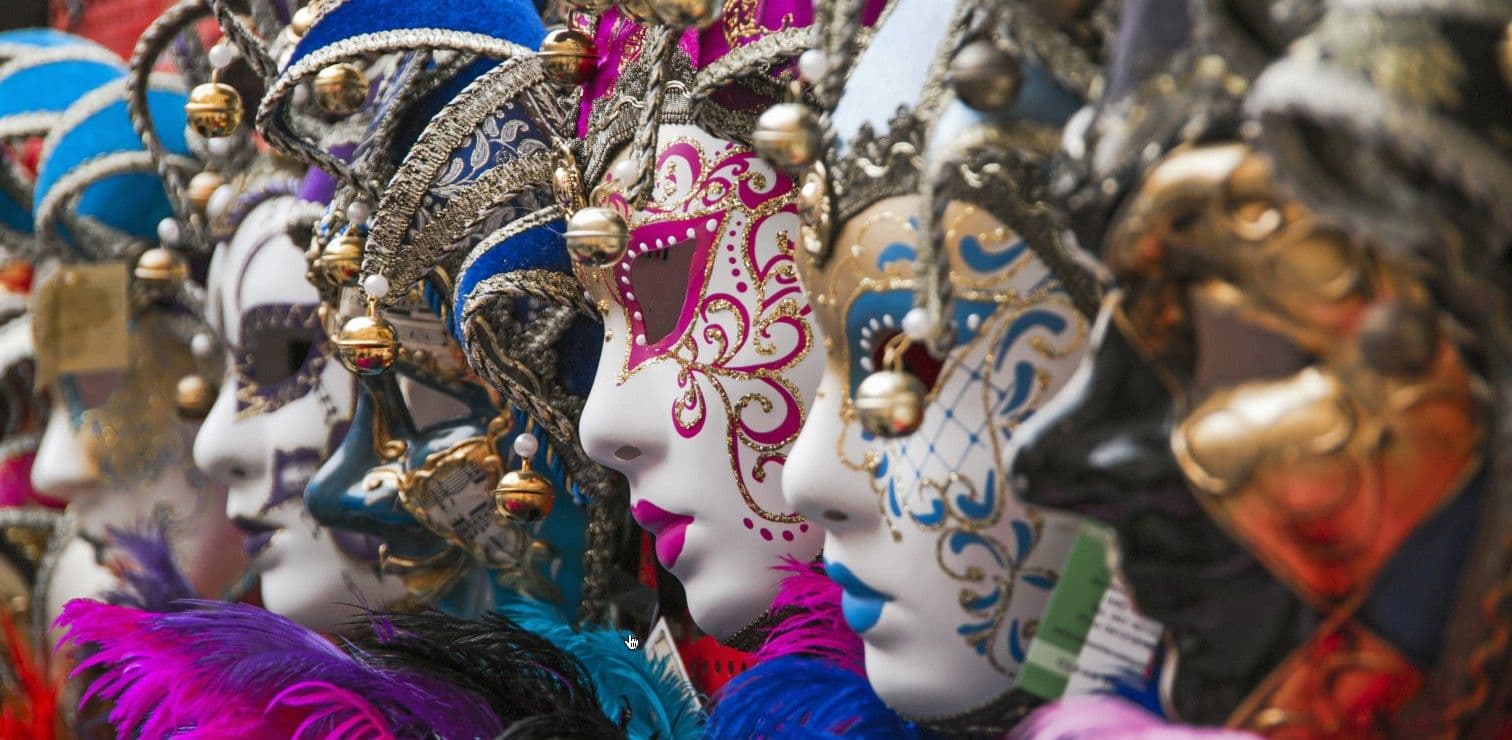
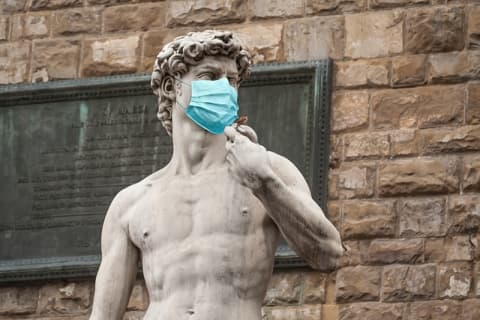
For the near future, protective face masks seem to be part of daily life in Italy, like cell phones, an item to tuck into jacket pocket or purse. To ensure everyone in Italy can have a handy supply, the government has mandated that pharmacies, smoke shops and even supermarkets sell basic surgical masks at a fixed, affordable price of 50-euro cents (about 59 U.S. cents) apiece. In a country where designer fashion is a major industry, masks not surprisingly have become a fashion item. Washable ones are available for a few dollars in all kinds of prints and colors. One enterprising shop near the swank Via Condotti shopping street quickly started offering silk models, selling for about 70 euros ($80) dollars.
Rome is big on Baroque. Ornate, imposing masterpieces abound, from the marble-adorned, opulent Jesuit churches with imposing facades clustered near Piazza Venezia to Bernini's monumental fountain in Piazza Navona or Borromini's dazzling architecture.
Also running through Rome is the artistic richness of the Renaissance. Gorgeous wall paintings by Raphael in the Vatican Museums and Michelangelo's exquisitely frescoed ceiling and altar wall in the Sistine Chapel are just a small sampling of stellar works from that heady artistic time.
But what if you're in the mood for medieval?
Rome does have some fine examples of medieval art and architecture, including in the quaint Monti and evocative Old Ghetto neighborhoods. But much of Rome's medieval legacy lies buried under busy streets and bustling piazzas, since, over the centuries, the city's urban planners often just layered over pre-Renaissance levels of history. When, a few years ago, work to extend Rome's subway system unearthed walls and foundations of a medieval housing complex near central Piazza Venezia, archaeologists were overjoyed at the opportunity to learn more about every-day life from that long-ago period.
But, if you want to really immerse yourself in an a medieval milieu while based in Rome, an excellent option is a day trip to Viterbo, a walled city, which in entered through several ancient monumental gates known as "porte."
Viterbesi, as the 65,000-odd inhabitants of the town, are known, are fiercely proud of their history, with includes some of the most fascinating centuries in medieval times.
Like Rome, Viterbo, too is a "city of popes."
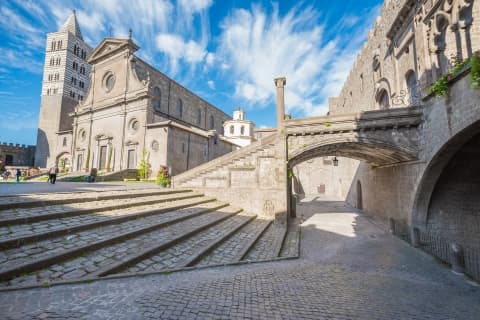
Viterbo's papal palace was a residence for five pontiffs who were elected in the town. Once ruled by Rome, Viterbo could be smug since in the 13th century, it, too, could boast being a home to popes. The papal palace is an imposing construction. But a loggia extending off it lightens the look. Come on a brilliantly sunny day, and enjoy the spectacle of blue sky showing through the arches, which resemble a string of glass-less, open windows.
Popes are elected by cardinals in a secret, closed-door session known as a conclave. Some times it takes a while for the electors to converge on their pick. One of the conclaves in Viterbo stretched on and on -- from 1268 till 1271. The Viterbesi lost patience with having to tend to the cardinals' lodging and meal needs. They reduced their rations to bread and water. And they made life for the electors even more uncomfortable by removing the roof of the palace, leaving the cardinals to shelter under a tent. Those moves considerably sped up the decision-making process and a pope was elected.
Viterbo's medieval quarter is the San Pellegrino neighborhood. Homes are distinctive, made from peperino, a deep gray volcanic stone. Flowers on windowsills brighten the scene. The quarter, with its winding, cobblestone streets, makes for leisurely strolling.
Look out as you walk the town for lions -- stone lions that is. In keeping with Viterbo's pride, the lion is the ancient symbol of the town and a frequent motif in architecture and design.
Among the medieval highlights to see is the church of San Sisto, which is some 1,000 years old. Leading up to the altar is a staircase carved out of tufa stone. Another must-see is the cathedral of San Lorenzo, a fine example of Romanesque architecture. Still another lovely church in the medieval San Pellegrino quarter is Santa Maria Nova, with a tiny cloister.
While in Rome, it's hard to avoid crisscrossing paths with tourists from around the world. Walking through Viterbo's streets you might find yourself to be among a handful of out-of-town visitors. Viterbo is a quaint bedroom community for many of its residents, who commute to Rome. The city also boasts a university, so many commuters heading into the city are students.
Viterbesi like to celebrate feast days in style. St. Rosa's feast day, on Sept. 3, is a joyfully-anticipated occasion to keep tradition. Men dressed in white outfits and caps and wearing red waistbands hoist a several stories-high sculpture known as a "macchina" in a procession that dates back to the 13th century.
There is much to explore and enjoy in Viterbo, which also makes a good base for a night or two for excursions to Etruscan sites in the nearby countryside. Viterbo's storied past itself hawks back to its beginnings as an Etruscan settlement.
****Blockbuster Raphael Exhibit Gets Extended Lease on Life ****
Italy celebrates its geniuses in a big way, and with no paucity of artistic talents who have left their creative mark on the world, the nation’s calendar of anniversaries of births or deaths to commemorate is almost always a busy one.
No sooner did than 2019’s abundance of exhibitions and other events to mark 500 years since Leonardo da Vinci’s passing wrap up, as followers of Destination Inspiration may recall, did 2020 bring datebooks filled with activities to toast another Renaissance master, Raphael, who died in Rome 500 years ago, on April 6. 1520, 37 years after his birth in the hill town of Urbino.
The unquestioned blockbuster event of this year in Italy promised to be the exhibition simply titled “Raphael,” to be hosted for three months at the Scuderie del Quirinale, an elegant gallery across the piazza from the presidential Quirinal Palace in the heart of Rome.
But after only three days of being open to the public, amid rave reviews, the exhibition was put on hold when Italy, like much of the rest of the world, went into lockdown, which included temporarily shuttering museums and galleries.
Luckily the biggest lender to the exhibition was the Uffizi Galleries in Florence which boasts the world's largest collection of Raphael's paintings and drawings. So, with many more of the artist's works still in Florence, the Uffizi was quick to allow its pieces in the Rome show to stay there beyond the originally scheduled closing date of June 2.
And that's wonderful news indeed, because, with other lenders also willing to keep their Raphael works on display longer, the exhibition has received a new lease on life just as Italy begins opening up again tourism.
The show brings together some 100 of Raphael’s works, including 40 from the Uffizi. A visit to the exhibit offers a never-before had the opportunity to see so many of Raphael’s works in one place.
"Raffaello" now runs run through August 30, and visitors are encouraged to do their part to keep the exhibition open by cooperating with safety-distancing rules.
Visitors must wear masks and buy tickets online. Entrance times will be staggered, with six people allowed to enter every five minutes. Then, to discourage art-lovers from clumping together in front of each masterpiece, lines have been indicated on the floor to follow, and personnel will ensure visitors don't linger in each room and keep some six feet apart, even among family members.
Eighty minutes are being allowed for the entire visit. Even before the lockdown, dispensers of sanitizing hand gel were strategically placed throughout the Scuderie.
Other treasures in this bonanza of artworks have been lent by the Louvre, the British Museum, the Albertina in Vienna and London’s National Gallery, as well as several fine Italian museums and galleries which possess some of the works of the artist, whose legacy is prolific despite his brief life.
A sure star of the show is “La Velata,” or “Woman with a Veil,” from the Pitti Palace collection in Florence. The portrait dazzlingly displays Raphael’s virtuosity in depicting details, in this case, the billowing folds of a gorgeous, creamy-colored silk outfit. Gazing upon the painting, admirers of Raphael might be reminded, because of the position of the sitter’s arms, of another portrait, “La Fornarina,’’ the artist’s tribute to the far less-veiled Rome baker’s daughter who was his muse and mistress, painted in the last year of Raphael.
It’s fitting that the tribute is held in Rome as Raphael’s art came to evolve and gloriously adorn the city’s prestigious palaces.
Recommendations always help in finding work, and architect Donato Bramante, a native of the east-central region of Le Marche as Raphael was, suggested to Pope Julius II that he bring him to the Vatican. Raphael’s crowning achievement as a papal commission is his stunning wall paintings of the then papal apartments -- what is now known as the Raphael Rooms. Part of the Vatican Museums, the rooms are sometimes barely given a glance by tourists eagerly rushing to see the Sistine Chapel, which lies ahead. Among the personages depicted on the walls by Raphael are his patron, Julius, Dante wearing a poet’s laurel and himself -- yes, a self-portrait of Raphael, in a black hat, looks intently out at the viewer.
One’s tribute to Raphael includes a stop by the majestic Pantheon. The artist was laid to rest in Rome’s remarkably preserved, imposing monument.
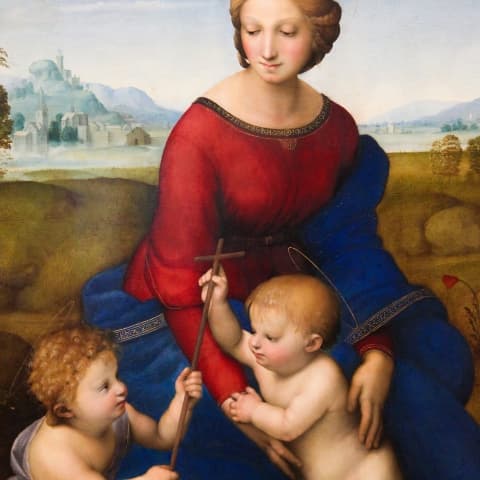
In the Italian language, adding one” to the end of a word makes something bigger. So, if “cena” which means dinner, “cenone” must be a very big dinner. And it is. On New Year's Eve, Italians, with friends and family gather around a table, at home, in neighborhood trattorie or hotel restaurants for an enormous meal known fondly as the Cenone.
And that's not all that's big the night. Often sponsored by cities and towns, fireworks displays are spectacular, and, yes, extremely noisy. So are the fireworks shot off from Italians' terraces, balconies or rooftops.
So if planning to spend New Year's Eve in Italy, pack a big appetite and perhaps some ear plugs, as the revelry lasts almost till dawn.
What to eat that eve depends largely on where you eat it, as variety in regional cooking is one of Italy's gastronomical riches.
But from north to south, a traditional New Year's dish is cotechino and lentils, a hearty pairing that calls for an equally hearty bottle of red wine to wash it down (after a brindisi, or toast, to the New Year, with some sparkling spumante). Cotechino is a kind of thick sausage made from ground pork rind and mashed pork parts such as shoulder and cheek. It is a specialty of the Emilia Romagna region, and one prized version is made in Modena.
Lentils are essential on Cenone menus. Since the legumes loosely resemble tiny coins, the superstition holds that eating them will assure you of wealth in the new year. Italian cooks have their favorite kinds of lentil, with many willing to pay extra for more renowned kinds, such as those from Castelluccio, an Umbrian town in the Apennines.
With such attention to its local dishes on New Year's Eve, the Emilia Romagna region not surprisingly features some of the more dazzling traditions to bid farewell to the old year. Bologna boasts the Rogo del Vecchione (The Blaze of the Old One). A figure some four-stories high, made of papier-mache, wood or straw, is set ablaze, and fireworks are exploded, too. If that sounds wild, New Year's Day in Bologna brings a more classic form of entertainment -- a free-admission ball, in the afternoon, where dancers can waltz, polka or otherwise twirl to their delight in a Great Ballroom is on tap for the first day of 2020.
Not to be outdone, the elegant town of Ferrara in that same region, in a historical recreation of a 1554 fire at Estense Castle, ignites a blaze that sets up clouds of colored smoke.
For those in search of a more quiet, reflective manner to mark the arrival of a new year, the Umbrian hill town of Assisi has a prayers service led by Franciscan friars. An Umbrian Cenone menu is likely to feature chickpeas and truffles.
While many will have their Cenone at homes of families and friends, where they will dig into plates of steaming lentils, there are departures from traditions. This year, for example, the port city of Genoa is putting on a Cenone in its famed Acquarium. Not coincidentally, a traditional Ligurian Cenone is centered around dishes of fish, not meat.
While a Cenone at a restaurant can be pricey, free entertainment abounds.
Rome offers a mega-concert that goes on for hours, after the midnight fireworks light up the sky. One popular open-air concert place is the sprawling grounds of Circus Maximus, the ancient Roman entertainment venue. One good vantage point to see the pyrotechnical shows is the Janiculum Hill, affording a view of the city's signature monuments such as the Pantheon.
Milan's heart is the square outside the magnificent Gothic Duomo, or cathedral, and that space provides the venue for its ring-in-the-new-year concert.
The custom of hailing the new year by throwing out the likes of broken chairs and cracked pottery from windows and balconies has largely faded away, to the relief of those passing by in the streets below. But some revelers in Naples and other parts of the south, still cling fondly to the usage, so beware if taking a stroll to burn off some of those Cenone calories.

While a handful of cities dominate tourism in Italy — Rome, Milan, Florence, Naples and Venice are magnets for tourists — the real urban backbone of the country are its towns.
Perhaps reflecting that Italy only became a unified country a century-and-a-half ago, these towns fiercely cultivate their urban identity, a pride that took root centuries ago when rival duchies and principalities concentrated power and influence, often through patronage of the arts.
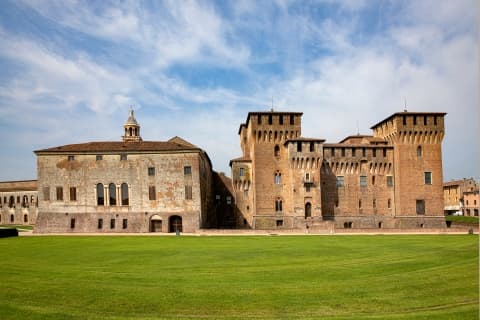
One such proud town is Mantua. Well-to-do, almost austerely elegant in style, Mantua is one of several town in Lombardy awash in art and architectural gems. In Mantua’s case, this cultural richness is the legacy of the Gonzaga noble family, which passionately pursued commissioning frescoes and palaces that are some of the finest examples of Renaissance architecture.
Starting in fall 2019, and lasting well into the first months of 2020, Mantua is showing off its artistic jewels in a special way. It is celebrating the talented painter and architect, Giulio Romano, dubbed the “Mannerist master,’’ who left his mark on the town as well as villas in surrounding areas.
Under the Gonzagas, art and architecture blossomed, giving the town the reputation as "Mantua the Glorious."
In the 15th and 16th centuries especially, the Gonzaga princes were famed as art patrons, along with Isabella d'Este, whose husband Francesco II, was one of the family's more notable rulers. It was Francesco who sponsored Giulio Romano, a native Roman whose 16th century works in the city is being showcased with two major exhibitions as well as through numerous walking tours.
Chosen as venues for the pair of exhibitions are two palazzi that are Mantua's tourist highlights.
The Ducal Palace is hosting "With a new and extravagant manner, Giulio Romano in Mantua." It's a clever title that captures the spirit of the artist, a master of mannerism and innovation, who is considered to be the most celebrated pupil and heir of Renaissance superstar Raphael.
At the core of the exhibit are 72 drawings lent for the first time by the Louvre in Paris. Much of the art that the Gonzagas amassed ended up hauled away by Napoleon in the early 19 th century, The Louvre doesn't lend its treasures easily, especially to smaller museums abroad. That it did so for this show is a tribute to the Ducal Palace Museum Complex's Austrian dynamic director, part of a vanguard of daring directors hired a few years ago after Italy dropped its rule against having foreigners at the helm of its top state-run museums.
Also lending for the show are the Albertina Museum in Vienna and the Victoria & Albert Museum in London.
The Ducal Palazzo is sprawling, fortress-like affair facing cobblestoned Piazza Sordello in the heart of the old town. Giulio Romano designed one section of the palace, known as Corte Nuova (New Court), which is next to a castle. One of the rooms in the palazzo has a painting depicting a late 15th century battle between the Gonzagas and a rival family that took place in the square. Frescoes by, yes, Giulio Romano, and paintings by Tintoretto and Rubens are among the art decorating the palace.
In the castle, are some of the most celebrated frescoes of the Renaissance, by Mantegna. Illustrated are scenes of the Gonzaga heydays. The family was famed as horse breeders, and in the frescoes are scenes depicting their servants with hunting dogs and a horse. On the vaulted ceiling, Mantegna pulled off a remarkable trompe l’oeil featuring mythological scenes.
The companion exhibition boasts the intriguing title "Giulio Romano: Art and Desire." It is hosted in Mantua's other lavish palace, Palazzo Te, which was designed by Giulio Romano on the edge of town, as a kind of summer residence and playground for the Gonzagas.
The show explores the relationship between erotic images from the classic world and the inventive figurative work of artists in Italy's Renaissance. Again, the exhibit is enriched by loans from some of the world's leading museums, including New York's Metropolitan Museum of Art and the Hermitage, in St. Petersburg, Russia.
Perhaps the most renowned room in Palazzo Te is the Room of the Giants, with a spectacular fresco with almost frenzied scenes of bare-breasted damsels, men brandishing swords and clubs, and, in tribute to the Gonzagas, magnificent, muscular steeds.
The two mega-exhibitions run through Jan. 6. But the city's feting of Giulio Romano's heritage continues well into June, with occasional guided walking tours of Mantua's historic center to admire the artist's influence on the town's architecture and urban planning. Also on tap are guided tours in some of the villas where Giulio Romano worked in the countryside outside Mantua.
The town, prone to fog in winter, is surrounded on three sides by small lakes, which are really part of the Mincio River. The waters run under stately portico-topped bridges, including some designed by Giulio Romano.
These watery surroundings figure in the centuries-old cultivation of what is possibly the most famous agricultural product in the Mantuan countryside: rice. Mantua’s signature rice dish is called “alla pilota,” made with a kind of pesto of ground pork, butter and a favorite local cheese, Grana Padano. Also popular are risotto made from humble river life: catfish and frogs are often among the catch that makes the leap into local kitchens. All make for hearty fare for tables set on brisk winter nights.
Cities in Italy often have their “signature” sculptures
Michelangelo’s towering David, in the Accademia Gallery in Florence, is so beloved it has become an iconic symbol of Italy’s artistic genius. Ask Neapolitans what to see in their city, and one frequent suggestion is the sculpture of Cristo Velato (Veiled Christ), an 18th century masterpiece in the Sansevero Chapel by Giuseppe Sanmartino who worked the marble so expertly, the shroud covering Christ resembles nearly transparent fabric instead of stone.
Rome has so many candidates that multiple favorites compete for the affection for natives and visitors alike. Michelangelo’s Pieta’ in St. Peter’s Basilica is a must-see. So much sculpture adorns the city’s monumental fountains, there seems to be a marvelous piece in nearly every piazza. But one work that is a top contender for a signature sculpture for Rome is Antonio Canova’s Venus Victrix in the Borghese Gallery in Villa Borghese, a popular Rome park just beyond Via Veneto.
In a Carrara marble sculpture that was shocking in its time, Venus bares her breasts — that wasn’t so eyebrow-raising in itself, but the model was Paolina Borghese, Napoleon’s sister. Venus looks so comfortable and so seductive, with one arm propped up on a pair of marble pillows and her other hand clutching an apple as she reclines on a decidedly comfortable painted wooden couch.
While Venus is a rightful star of the Borghese Gallery, the sculptor will have the spotlight for five months in an exhibition entitled ‘’Canova, Eternal Beauty.” Opening on October 9 in the city’s Museo di Roma (Rome museum), the show promises to explore the relationship between the artist and the city where he died in 1822 and where he was inspired to create some of his most noted sculptures at the height of his careers straddling the 18th and 19th centuries.
The exhibition brings together some 170 works by him and his contemporaries. Organizers are promising backdrops for the pieces, and, with clever lighting, will aim to recreate the warm atmosphere that Canova achieved when using torchlight when guests and other admirers would visit his workshop.
On loan for the exhibit which runs until March 15, 2020, are works from the Vatican Museums, Rome’s Capitoline Museums, the Hermitage from Russia, the Correr Museum in Venice and several other Italian museums.
Braschi Palace, which hosts the Rome museum, is a late 18th-century palazzo which was the last palace built in Rome for the family of a pope.
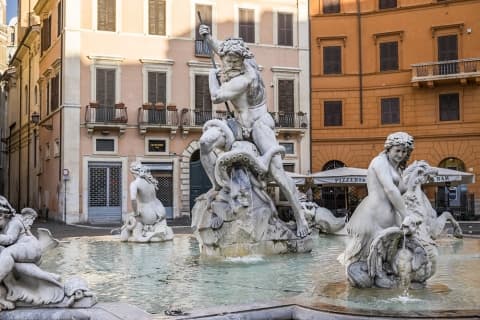
Leaving the palazzo from one of two monumental entrances brings you to Piazza Navona. There, after pondering the works of Canova and his fellow sculptors, you can — admission free — admire a masterpiece of another great sculptor in Rome: Gian Lorenzo Bernini (who also has work in the Borghese Gallery). Artists set up their easels and children scamper up and down the oval-shaped ‘’square’’ that in ancient Roman days hosted chariot races. Bernini’s Four River’s fountain is awe-inspiring
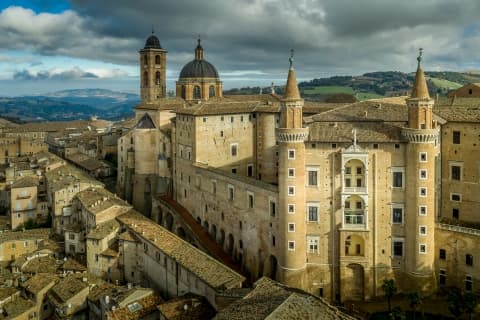
Urbino, hilltop heart of the Renaissance that is home to Raphael and harmonious architecture
How could a town at the heart of the Italian Renaissance be so often overlooked by art-loving travelers? The only plausible answer is that Urbino, a hill town in the scenic Marche region, needs a little work to get there.
The most convenient rail station to Urbino is some 30 minutes away, by bus or car, in the Adriatic beach resort of Pesaro. No major highway off-ramp lies near Urbino. Yet once a traveler, winding through the Marche's green, gentle hills, sees Urbino looming ahead, the iconic twin towers of its ducal palace dominating the panorama, the rewards for making that extra effort to visit the town are instantly plain.
That both Raffaello Sanzio (Raphael) and Donato Bramante, a Renaissance architect, were born in or near Urbino, seem fitting. The compact town, with its historic heart perched atop two hills and its steep stone streets sloping toward Renaissance-era walls, is a living repository both of masterpiece paintings and exceptionally aesthetically-pleasing architecture.
Little of its physical construction is changed from its heady days more than 500 years ago when the ducal court enjoyed renown as one of the most enlightened and prestigious places during the Renaissance. The cover of Italian travel magazine Bell'Italia once summed up Urbino this way: "The Renaissance lives here."
Imposing yet elegant, expansive while finely proportioned, the palace is the star of Urbino. Take a leisurely half-day to explore it, all the while breathing in an atmosphere that, centuries later, still conveys how the court of the Duke of Montefeltro of Urbino, Federico, was celebrated as a capital of culture and learning.
The palace is also home to the National Gallery of the Marche, whose painting collection includes Raphael's "The Gentlewoman," also known as "the Mute One," for the closed lips of the woman posing for the portrait. The model was possibly Duke Federico's daughter. Other stars of the collection are works by Titian and a pair of paintings by Piero Della Francesca, notably his "Flagellation," which was commissioned by the duke. Curiously, Raphael's work and the paintings by Piero Della Francesca', were all stolen one night from the gallery in 1975, and all found, intact, a year later.
The duke won fame as a skillful warrior, astute politician and humanist. Of this last trait, you will have to be convinced as soon as you step inside the duke's study, marvelous beyond compare. Its walls feature intricate designs of inlaid wood, executed with an exquisite perspective on par with the best painters of the time. The designs make the walls appear as if they actually are three-dimensional bookshelves, filled with stacks of books and journals and objects like an hour-glass and a knight's armor. The inlay effect is so cleverly achieved that walls resemble cupboards with half-opened, lattice-wood doors, but it's all a wonderful illusion.
The motifs of the inlaid wood reflect the duke's passions, including astronomy, music, books, and architecture. As for real books, the duke had a very rich collection which wound up in the 17th-century in the Vatican Library.
Also to be admired is the Courtyard of Honor, a jewel of architectural harmony that is the heart of the palace complex.
The palace art galley displays a portrait of the duke, with his high forehead, receding hairline and a hooked nose. Those who have visited the Uffizi Gallery in Florence might have admired an even more celebrated portrait of the duke, in a scarlet gown and a matching hat, painted by Piero Della Francesca and displayed alongside a twin portrait of the duke's much younger wife, a pale Battista Sforza. When his wife died, at only 26, the duke, two decades her elder, was said to have been heartbroken.
The palace commands charming views of the hilly, often terraced, Marche countryside.
Urbino's reputation as a center of learning continues vibrantly today. It is home to a university, which draws international students as well as Italians, and includes a school of journalism considered among Italy's best. The young population keeps the town lively. It also means that trattorie feature hearty and reasonably priced meals to be washed down with local wines, with no pretensions and much hospitality.
Strolling the steep streets give one's calves a workout. Often peeking out from the end of narrow lanes are fine glimpses of the hills surrounding the town.
Two streets are named for native sons -- Via Raffaello and Bramante, the architect whose celebrated commissions included works on St. Peter's Basilica in Rome.
Along Via Raffaello is the house where Raphael was born and raised, learning painting from his artist father, The house has a charmingly simple courtyard, and on its walls is a fresco painting of a Madonna and Child by Raphael. Although done while he was still a youth, the painting strongly hints at the expressive portraits Raphael would produce in his career. In this case, a serene-looking Madonna holds a secure-looking, sleeping Baby Jesus.
Regarded as one of the Renaissance's most complete painters and certainly one of its most popular in his lifetime, Raphael died young even for those days, at 37. Urbino, along with other Italian cities that are home to his masterpieces, is expected to hold special initiatives in 2020 to mark the 500th anniversary of his death.
Two millennia of Italian-Jewish heritage invite you to visit
Italy’s small but vibrant Jewish community dates back 2,000 years, to its establishment during the early days of the Empire. Those who want to explore its fascinating story can follow several itineraries, some less traveled than others.
Many begin their visit to Jewish heritage sites in Rome's "Vecchio Ghetto," an ancient, close-knit neighborhood that is one of the city’s liveliest but historically saddest. Narrow, tall (for Rome) apartment buildings and tiny cobblestone streets characterize this neighborhood near the Tiber River where, by papal order in the mid-16th century, Rome’s Jews were segregated. Even after its walls were torn down in 1848 and Jews moved out of the city, the Old Ghetto remained the heart of Rome’s Jewish community. A plaque along the neighborhood’s main street, Via Portico d’Ottavia, commemorates the day in 1943 when Nazi occupiers rounded up and deported citizens, most of whom perished. A highlight of the area is the museum adjacent to the impressive synagogue, right across from Tiber Island.
Venice's former ghetto, its large central gathering place ringed by the tall, narrow buildings where Venetian Jews lived segregated lives, and today found in the charming Cannaregio district, far from tourist routes, is a haunting landmark. Guided tours of two or three of the surviving synagogues help visitors appreciate the dynamic culture and deep faith of the lagoon city’s Jewish community even today.
Other cities and towns off the well-trod tourist path speak just as directly to the roots and present-day culture of Italy’s Jews.
Ferrara, a beautiful small city in the Reggio Emilia region of north-central Italy, was a flourishing center of art, politics, and gastronomy in the Italian renaissance and is today a UNESCO World Heritage site. The historical legacy of the powerful Este family is most notable in the city's imposing castle, the foundations of which date to the 1300s. There is a fine medieval quarter, many splendid palazzi, and a 6-mile long ring road circling the city’s fortress-like walls that is a joy to cycle on, since Ferrara, unlike most Italian cities, is flat. Local Ferraran writer Giorgio Bassani’s novel “The Garden of the Finzi-Continis” and the movie adapted from it tell the story of one of Ferrara’s more prominent well-to-do Jewish families that, after the anti-Jewish laws of 1938, saw their life of privilege shrink before their eyes until their final deportation. The role of Jews in Ferrara’s and Italy’s history is explored in the city’s National Museum of Italian Judaism and the Holocaust, known by its Italian acronym MEIS. One of Italy’s newer museums, it offers thought-provoking exhibits, such as one exploring the first 1,000 years of Judaism in Italy, from ancient Roman times to the Middle Ages, and the relationship of Jews with both pagans and Christians. Among the museum’s most popular attractions is the Garden of the Questions, where visitors can stroll among fragrant plants like laurel and thyme that were used to perfume the prayer that ends the Sabbath; for those unfamiliar with Jewish culture, the garden features panels illustrating kosher dietary rules. This year, through September 15, the museum is hosting an exhibit titled “The Renaissance Speaks Hebrew,” featuring art, manuscripts, and other objects, including the oldest dated Italian Torah, lent by the Jewish Museum of Paris. The exhibition aims to highlight the accomplishments and vicissitudes of Jews during the Renaissance in cities including Florence, Mantua, Venice, and Rome, in addition to Ferrara.
Pitigliano, carved out of Tufo stone and set dramatically on a hill in Tuscany’s Maremma countryside, quite literally stops visitors in their tracks as it looms before them. Having roots stretching back to Etruscan times, it has been dubbed “Little Jerusalem’’ in tribute to the Jewish community located there since the late 1500s. Like Assisi, another stony hill town, it gives off a peaceful, soothing, almost mystical air in spite of the visitors traipsing its streets and alleys. It's ghetto neighborhood features a synagogue, an oven for unleavened bread, a kosher butcher, and ritual baths. At night, the twinkling of the town's lights are breathtaking. Pitigliano is a rewarding day trip from a larger or as well as a delightful spot for an overnight within its hospitable walls.
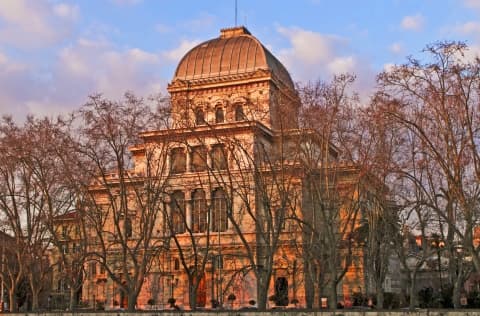
Turin is a city of intriguing contrasts that beckon exploration.
Reflecting its storied history entwined with the royal House of Savoy, the noble line which gave Italy its last kings and queens, stately and regal palaces, elegant stone squares, such as Piazza San Carlo, and orderly street layout evoke the feel of a history-conscious, mid-sized French town. Yet Turin has earned a reputation for daring modern architecture. In one of the most stunning examples, superstar Italian architect Renzo Piano's transformed the Lingotto, an early 20th-century Fiat automobile production site and roof-top test track, into a lively meeting and arts place, with shops, a concert hall, eateries, a hotel and a strolling area on top which gives panoramic views of the city, including of the Alps which form a dramatic backdrop for Turin.
The Piedmont countryside just outside of Turin, or Torino, its Italian name, is dotted with towns famed for some of Italy's signature food products. To name two: there's Alba, with its prized white truffles, and Asti, home to a sparking wine. Cafes in Turin bring coffee-drinking to seriously high-levels. Several coffee houses, with their marble counters and tables, are centuries-old, and Torinesi, as the locals are known, sip their cup of "bicerin," a cherished brew of chocolate, coffee and milk. Since Turin isn't overrun with tourists, it's easy to slip inside and while away some hours soaking up the coffee-house atmosphere and nibbling at some of Turin's fine pastries, just like the locals do.
Turin's food is hearty, ranging from risotto made from rice produced in Piedmont's paddies to ravioli-like pasta stuffed with the likes of sweetbreads and smothered with creamy fondue-like sauces.
While culinary traditions are cherished in Turin, one of Italy's -- and now the world's -- more innovative culinary movements -- Slow Food -- was born in the nearby town of Bra, famed for its cheese festivals. The icon of the Slow Food movement is a snail, but there's nothing snail-paced about how the thrust toward treasuring and re-configuring old dishes caught on. Every other year, Turin hosts the Salon del Gusto (Taste Salon, a kind of food fair,) exalting the wholeness and healthiness of Italian foods. The appointment is held, not surprisingly, at the Lingotto.
Aperitivo bars abound, often the haunt of lively young crowds, a counterpoint to the more stately air of historic coffee house.
Ferrero, the sweets maker that gave Nutella to the world, began in Turin, taking advantage of hazelnut orchards near the city. But the city also prides itself on artisan-made chocolates, by generations-old confectioners. Chocoholics can sample these delightful confections in the candy-makers' classy-looking shops. For those wanting the best of both worlds -- hazelnuts and chocolate, Turin has thoughtfully given the world "giandujua," a favorite flavor for candies and ice cream.
In a change-of-pace from Italy's museums awash in Roman antiquities, tourists in Turin can take a mile-long stroll through the exhibits at the Egyptian Museum, embracing what's considered the finest collection of Egyptian antiquities outside of Cairo. In 2015, after a nearly three-year-long makeover, the Museum showed off a new layout, with three new floors and a roof garden. Dante Ferretti, Italy's Oscar-winning set designer, worked on the project, and in the last few years, the number of visitors to the museum has been soaring annually.
But while a museum celebrating a past civilization is Turin's pride-and-joy, Piedmont's capital has lately been building a reputation as a dynamic contemporary arts scene -- yet another delightful contrasts in the city's character that is so appealing.
Turin also claims an air of mystery, since it is home to the enigmatic Shroud of Turin. The 14-foot-long linen cloth is kept in a specially made, bullet-proof and climate-controlled glass display in the Chapel of the Sacred Shroud, which is sandwiched between the Royal Palace and Duomo, or cathedral. The cloth used to be put on brief display every 25 years, but recent decades have seen the shroud, which some hold to be the burial cloth of Jesus, shown to the public less rarely. Pope John Paul II went to ponder it in 1998, and in 2000, the Jubilee Holy Year coinciding with Millennium celebrations, the shroud was again available for viewing. Pope Benedict XVI journeyed to gaze upon it in 2010, the same year it was open for several weeks to the curious and rank-and-file faithful.
Another iconic landmark in Turin is the oddly named Mole Antonelliana, since "mole" means a pile or heap. A late 19th-century architectural eye-catcher, the towering structure has a dome-like top adorned by a spire resembling a clunky antenna. It is home to the National Museum of Cinema. The spire features a viewing platform that boasts stunning views of the city and the mountains.
Turin is relatively undiscovered by tourists. Perhaps as home to Fiat, long Italy's largest private employer, the city became too associated with assembly lines and workers. But the 2006 Winter Olympics, based in Turin and taking advantage of nearby Alpine slopes for skiing and other sports, showcased the city's attractiveness and attractions and boosted tourism.
For those considering seguing from an Alpine ski week to several days of culture and culinary pampering, Turin can be an ideal option.
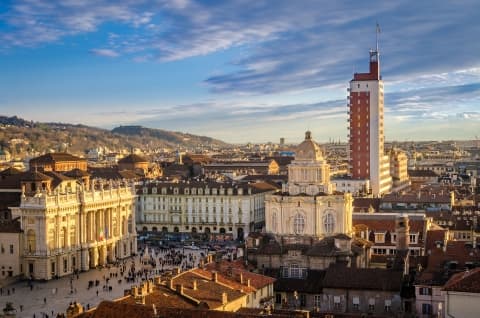
While many visitors to Italy arrive with a checklist of well-established must-sees, including a plenitude of ancient monuments and museums so abounding in paintings and sculptures even their storerooms are overflowing, temporary exhibitions also offer marvelous opportunities to appreciate the country's cultural wealth. Consider leaving some free time to catch an exhibition or two.
Cities on the main tourist paths all have palazzi that offer exhibits of painting, photography and other arts.
When in Milan, for example, check out Palazzo Reale, practically flanking the Gothic-style Duomo, or cathedral, in the city's heart, for the venue often offers blockbuster exhibitions.
Those lucky enough to visit Milan in late spring this year, Palazzo Reale is hosting many of the relatively few surviving works of Antonello da Messina, the master Sicilian painter of the 15th century. Running through June 2, Palazzo Reale's exhibit brings together some of the works that earned Antonello a reputation as one of the greatest portrait artists of his time. Only about three dozen paintings by the native of Messina, the Sicilian port city which was destroyed by an earthquake, are known to have survived to this day, and this thoughtfully arranged show brings together 20 of those works, including from Sicily, elsewhere in Italy, the United States and Britain. Unusual for his times, his portraits' subjects seem to be personally engaging the viewer, sometimes with ironic or playful gazes.
Palazzo Strozzi in Florence is another venue to keep in mind when in the mood for top-notch exhibitions. Through July 14, the palace is hosting a show exploring the talents of Andrea del Verrocchio, a key artist of Florence's Renaissance whose pupils included Leonardo da Vinci. The exhibition features paintings, drawings and sculptures from museums in Europe and the United States, bringing together for the first time works by Botticelli, Ghirlandaio, Perugino and others who studied Verrocchio's ways. The exhibition also includes a special section at Florence's National Museum of the Bargello, famed for sculptures.
Coming as Italy marks the 500th anniversary in 2019 of Leonardo's deaths, the Strozzi Palace show is a timely occasion to see how the artistic genius and other master painters of his times were inspired by Verrocchio and admire the prolific painting output during the heady artistic years of Lorenzo the Magnificent's tenure in the Tuscan city in the late 1400s.
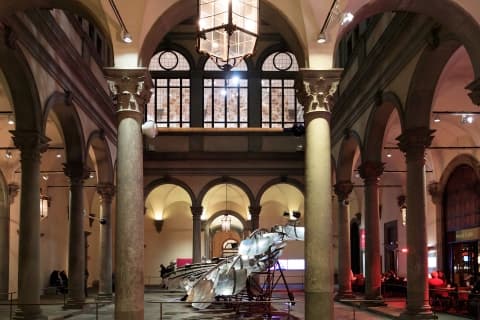
When Angela Merkel wants a rejuvenating break from the rigors of running Europe's economic powerhouse, she frequently heads to Ischia, the Italian island of volcanic origins of the Bay of Naples. The no-nonsense German leader, towel in hand and sporting a sensible one-piece bathing suit, can be spotted doing what many Italians do -- relaxing at one of the island's many spas featuring thermal waters, piped in from the Mediterranean waters surrounding Ischia.
One can opt to stay in hotels offering mud-pack treatments, indoor or outdoor pools with soothing waters and rooms to inhale vapors regarded by many as just the right tonic for achy bones, stuffy head or clogged pores. Ischia's relatively mild temperatures mean some hotels operate outdoor pools with thermal waters all year around. Also very popular on Ischia are the virtual amusement parks of thermal waters. For a set fee, one can linger for a few hours or all day. The pools often have breathing views of the sea. One moves from pool to pool with varying temperatures and lets go of stresses and cares.
Swimming off Ischia is like having the sea as a personal spa. Thermal waters bubble up from under the surface of the waters near black-sand Maronti beach.
A popular Italian pasta sauce is called "mari e monti" -- seas and mountains -- and features seafood and mushrooms. By that logic, Ischia could certainly have inspired the combination. Away from the well-trodden tourist paths or larger resorts, side roads lead to villages little changed from when they were sleepy fishing towns. Go to the top of the extinct volcano for striking panoramas and sunsets, while dining on roast rabbit or pasta made with rabbit-based sauces. Upper Ischia is where many Ischitani -- as the natives are known -- go for their Sunday lunch.
But spa culture permeates Italy up and down the peninsula. A visit to Rome's ancient sprawling Baths of Caracalla, where Imperial citizens relaxed, reinvigorated their bodies and stimulated their minds through lively discussions with fellow bathers is a reminder of how essentially little this thermal bath culture has changed in Italy over the ages.
"Taking the cure" at thermal spas is sometimes prescribed by doctors for everything from arthritis to acne. Does it work? Who knows? For sure, a stay in Italy's many spas make for soothing getaways.
In the Alpine South Tyrol (Alto Adige) region, the town of Merano beckons to spa-explorers. After a day on the ski slopes or crossing snow-covered fields Nordic-style, an inn's indoor pool fed by thermal waters is a welcome routine. But many spas run year-round in the Alps, where Italians and many Europeans north of Italy come to hike in the meadows in spring, summer or fall, revel in the mountain air and replace all those burned calories by tucking into hearty breakfasts and dinners reflecting the Austrian influence from across the nearby border.
The region is officially trilingual -- German, Italian, and Ladino -- the latter an ancient tongue spoken by a minority in that part of the Alps. Merano thus has a second official name, Meran.
Outdoor life dominates, with so much spectacular nature at one's doorstep.
With so many spas in Merano, it's easy to find one that fits one's budget and schedule. As in other spa towns, one can book a stay of several days, pampering oneself with attentive staff who make sure the kitchen cooks something to fit your dietary preference and needs. For those who plan to be mainly outdoors in the magnificent Dolomites, day-spas, where treatments can be booked by the hour, are a convenient option.
Kinds of saunas range from Finnish to South Tyrolean style with organic hay. There are "snow rooms" and steam rooms. Whirlpools, mud and body wraps and thermal baths are other popular choices.
Energized, one can stroll through the city's historic center with medieval porticos and admire palazzi built in Beaux Arts style. There’s a castle which once served as the winter residence of Queen Elizabeth of Austria. Botanical gardens and seasonal festivals are ideal for browsing, with a renowned Christmas market, a spring festival and another celebrating the local grapes, which make for some fine wines among the highlights.
A classic spa town in the heart of Italy is Montecatini Terme, in Tuscany. Its picture perfect setting is a green valley. Its reputation as a thermal bath destination dates back to the days of the, yes, ancient Romans. Drinking Montecatini's mineral waters is what many sojourners do here. Mud baths are also popular.
The main spa establishments offer a vast menu of body-rejuvenating treats. One can book by the hour or even less time. Possibilities include "acquagym" or pedaling a "hydrobike” in thermal waters. Or perhaps some more traditional laps in a thermal pool, followed by a massage.
There are whirlpools with oxygenated waters, massages with volcanic stones and mudpack facials. Everyone seems to be working hard at being healthy. Over the years, the classic activity of filling and drinking bottles of mineral water has morphed into a range of holistic treatments featuring methods from Thailand, California and Hawaii.
If too much touring of Italy's artistic masterpieces risk triggering shades of Stendhal syndrome, a stay of a day or two in Montecatini, which essentially exists to relax and rejuvenate visitors, might be a handy destination. If you've craned your neck to admire too many cupolas or frescoed ceilings, Montecatinia spas also offer packages aimed at postural relief.
If your itinerary bypasses the larger spa towns, perhaps do what modern day Romans. A popular day excursion for Romans who want to pamper themselves is a drive to the Tuscan town of Saturnia. There one can spend a few hours lounging in thermal waters of hotel pools which let day-trippers swim, shower and dine there, for a fee, and then enjoy lunch. One can also take a dip for free in the thermal waters in a lake fed by a waterfall carved naturally out of travertine stone.
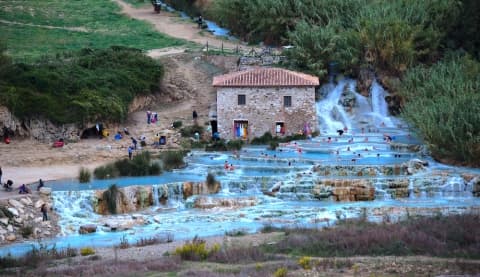
Leonardo da Vinci’s accomplishments spanned from the arts to the sciences, so no wonder he is hailed as the Renaissance man. He painted, he drew, he conceptualized flying machines centuries before the helicopter was invented. He was fascinated by anatomy and geology. No surprise, then, that there is a wealth of exhibits this year in Italy celebrating the 500th anniversary of the death of the Tuscan genius.
So many possibilities to put Leonardo ‘’on display” abound in Italy that the Uffizi Galleries in Florence got a jump on the celebrations by hosting the display of Leonardo’s Codex Leicester, on a loan by owner Bill Gates. The highly popular display ran from late October to Jan. 20. But Italy’s renowned arts museum will also play a key role in what promises to be a stellar attraction of the 2019 anniversary events. A 1473 landscape that is Leonardo's earliest known drawing will go on rare display, for five weeks, starting April 15 in Vinci, Leonardo’s home town near Florence. The Uffizi’s collection includes the drawing among its treasures, but because the work is so fragile only occasionally displays it.
Before being sent to Vinci, the drawing was being given its first-ever scientific scrutiny by experts at a Florence restoration laboratory who hope to learn new details about how Leonardo worked on it. Visitors to Vinci will be able to admire “Landscape Drawing for Santa Maria della Neve” and decide for themselves, while exploring the countryside around the town, what actual scenery might have inspired Leonardo.
Florence itself will host three celebrations in 2019 with a Leonardo theme. They include a show at Palazzo Strozzi about the artist Verrocchio, Leonardo’s maestro. From March 25 until June 24, Palazzo Vecchio will display a selection of some illustrations from the Codex Atlanticus. which belongs in Milan’s Ambrosiana library collection. Later in the year, a show exploring Leonardo’s botanical studies is also planned.
In Milan, the Ambrosiana as it’s known, will put on several exhibits, with one of them running from June till September and featuring 23 sheets from the Codex Atlanticus from Leonardo's French sojourn. There will also be a display of drawings, both by Leonard and by artists of his circle, that also runs till September.
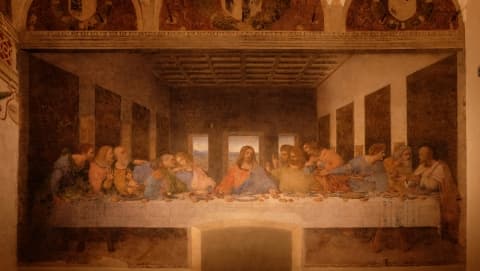
Milan, of course, boasts Leonardo’s “Last Supper” in the refectory of Santa Maria delle Grazie. In the city, one can also stroll the banks of the city’s ‘’Navigli,’’ for which Leonardo had devised a system of navigation along the waterways.
Several other temporary exhibits are being planned for that northern city with its wealth of museums. The Museum of Science and Technology will host a show that runs until Oct. 13 exploring the artist’s interests and studies in engineering and other fields.
Milan’s Palazzo Reale (the Royal Palace) will mount a show evoking “the marvelous world of nature before and after Leonardo.” Running from March 4 until June 23, it will explore how the artist changed perceptions of nature in Lombardy, the region whose capital is Milan.
Turin, the hometown of Fiat, the carmaker, will host “Leonardo da Vinci. Designing the Future.” Running from April 16 through July 15 at the Turin Royal Museum, the exhibit display more than 50 works that explore Leonardo’s genius in both science and art through his drawings. The show takes good advantage of drawing from the Turin Royal Library’s collection, including Leonardo's celebrated Codex on the Flight of Birds.” The works include drawings linked to such famed works of Leonardo as the “Virgin of the Rocks."