Scelerisque pulvinar gravida cursus morbi enim faucibus amet. Netus felis ipsum lorem consequat aliquet. Ullamcorper lacus eu morbi purus. Porttitor mauris tincidunt volutpat pharetra scelerisque. Velit non molestie pulvinar aliquam aliquam id libero cras. Mattis ornare egestas at interdum gravida feugiat. Nisi elementum nisl consectetur nec. Et lectus purus gravida tortor consequat cras sit luctus. Nunc feugiat in faucibus dolor. Proin aliquet id nisi quis cursus dignissim facilisis.
Milan is famed as Italy's fashion and finance capital, so many tourists in search of culture or entertainment might not put it on their to-see list. But they'd be missing much, for Milan has stellar art, innovative cafes (and Italy's first Starbucks in a spectacular layout!) bars, and restaurants, even pioneering "green-space" apartment towers, Milanese work hard, but they play hard, too.
Milan is decidedly a European city, in the sense that many who live and work there identify closely with the continent, as much as with the rest of Italy. Its architecture presents a striking change from many cities and towns usually featured prominently on tourists' Italian itineraries. There are skyscrapers, a rarity in Italy. And its main cathedral, the iconic Duomo, is a Gothic masterpiece, an uncommonly seen architectural style in Italy. If one must associate a color with Milan, it would be gray -- reflecting the dominant shade of building stone, and, alas, frequent fog in the winter. But that's no problem, as Milan has a multitude of indoor attractions, including several of Italy's top-notch museums, cozy cafes, and eateries whose energy level of evoking that of New York or London instead of Naples or Rome.
For too long, "seeing" Milan meant a stop at the Duomo, then a dash inside the refectory of a Dominican convent adjoining Santa Maria Delle Grazie church to gaze at Leonardo's da Vinci "Last Supper," and, for opera-lovers especially, perhaps some time to pose for photos at that Temple of Bel Canto, La Scala opera house.
Just like La Scala offers more than the first-class opera, with programs rich in dance productions and operas for children, the city's art collections go far beyond that one Leonardo masterpiece.
To mark the 500th anniversary of Leonardo da Vinci's death, the Biblioteca Ambrosiana (Ambrosian Library) will be displaying 46 of his drawings in the Atlantic Codex, which has been in the institution since the early part of the 17th century. The exhibition runs through Sept. 15.
One of Milan's brightest spots in the art world of late has been the impressive updating of the Pinacoteca di Brera, or the Brera painting gallery. In a break with the past, Italy allowed foreigners a few years ago to compete for directorships of its state museums. Among the prestigious appointments was that of James Bradburne, a British-Canadian and a trained architect, to head the Brera. He set swiftly to work to make the museum more welcoming and functional for visitors.
In an interview with Bell'Italia magazine, Bradburne explained that museums aren't mere "containers" of paintings, but a place where visitors can recognize their common identity. The gallery rooms were painted different colors, to reflect the emotions he felt the paintings they displayed were communicating to viewers.
Among the "stars" in the Brera is Mantegna's "Cristo Morto nel sepolcro e tre dolenti," A bronze statue by Canova and depicting Napoleon makes for a striking centerpiece in Brera's entrance courtyard. The extensive gallery includes sections on medieval art, Venetian Renaissance artists like Giovanni Bellini, a portrait gallery including works by Titian and Tintoretto, and another room dedicated to a masterpiece each by Raphael, Piero Della Francesca, and Bramante. Still, other rooms include paintings by Caravaggio and Rubens.
In the heart of the city, Palazzo Reale (Royal Palace) often is hosting art or photography exhibitions worth a visit. The palace, with roots in the medieval, played key roles in centuries of Milan's history, including when the city was under Spanish, and, then, Hapsburg rule.
Milanese seems always on the move -- between fashion shows, to and from high-finance meetings and other professional appointments. They hop off and on bikes that belong to a popular bike-sharing service, pedaling with determination on the flat streets while always managing, it seems, to look, well, fashionable and elegant. Trams hum as pedestrians stroll past trendy cafes and shops, and the subway system is efficient and widely used.
After so much hustle and bustle, the natives, along with the many foreigners whose jobs in banking, fashion and furniture design, architecture and other creative fields, see them posted to Milan, need to wind down, of course. Some decades back, an advertising company coined the catchy slogan "Milano da bere" -- Milan for drinking -- and the label's significance has evolved since. Aperitivo (aperitif) hours are popular, and every month seems to bring new restaurants experimenting with creative uses of time-tested ingredients and imaginative displays in dining rooms whose look and decor make them seem like candidates for interior design magazine shoots.
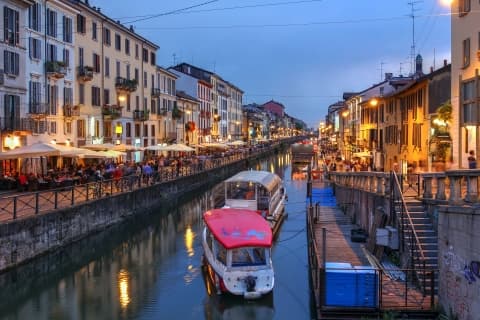
Late evenings for nightcaps, and especially weekends, see Milanese flocking to their favorite haunts -- cafes and bars -- lining the lively banks of the Navigli, a series of canals dating back to the Middle Ages and, until relatively recently, navigable. There's currently a push to make the canals navigable again. But for now, the neighborhoods flanking the Navigli make for pleasant daytime strolling, too, when one can browse antique shops before nightfall comes and the banks explode with nightlife. At whatever hour, these canals offer a countryside-like charm, a curious counterpoint to seriously urban Milan.
After the chilly month of January, as happy memories of Christmas gifts and year's end parties fade, Italians gear up for a new excuse to be festive and indulge in sweets, for Carnevale -- Italy's version of Carnival -- is coming!
"Carne" is "meat" in Italian, so the name literally means "Farewell to meat," a reference to the start of the Lenten period, on Ash Wednesday, when many of the Catholic faithful in Italy forsake meat until Easter comes.
The Carnevale period is tied to whatever date Easter falls on each year but generally runs from sometime in February through part of March, with exact dates varying from city to city, as many places from north to south boast their own treatment of the festivities.
Venice is Italy's acknowledged Queen of Carnevale, and this year's edition in the lagoon city beloved by tourists begins on Feb. 15 and ends on March 5.
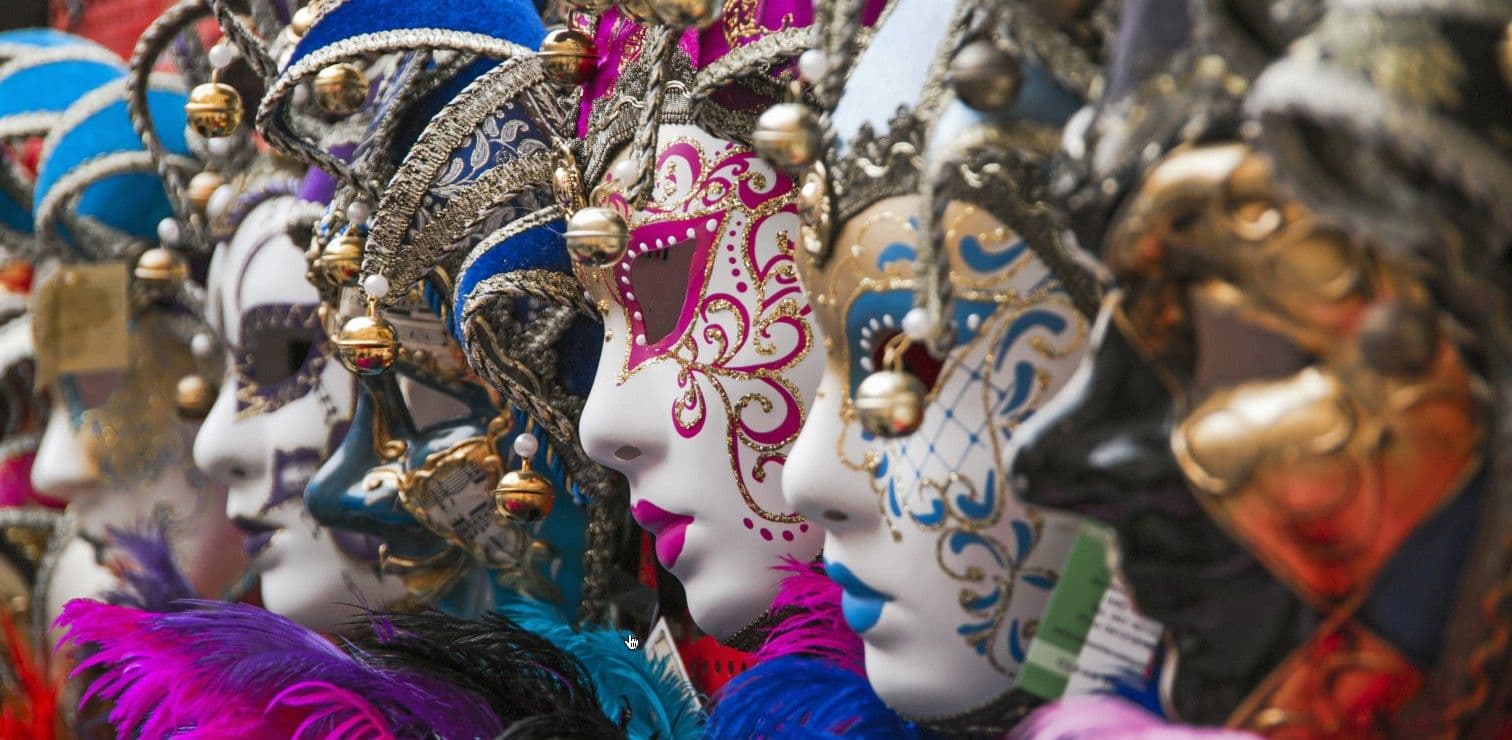
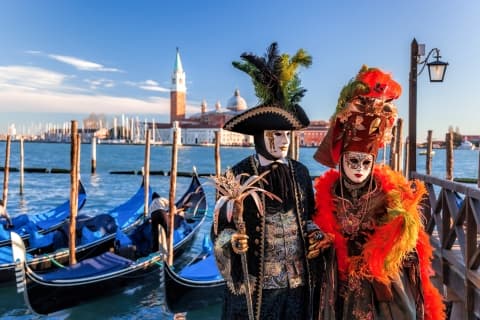
A glimpse of the many masks sold in Venetian shops year-round -- along with gondolas, Carnevale masks are icons for Venice -- shows how seriously the city takes this fun occasion, a tradition with centuries-old roots. Elaborate, exquisitely hand-painted masks can sell for hundreds of euros (dollars), but if you want to blend in with the vanishing breed of native Venetian while partying at Carnevale, you can find fun masks for much less. For most of the year, Venice's narrow, car-less streets are a claustrophobic squeeze, and Carnevale crowds only heighten the congestion. Still, it's fun to get close-up looks of masks and costumes as fellow merry-makers dash by from one event to another, perhaps a masked ball in one of Venice's sumptuous palazzi.
Key dates on the Carnevale calendar are "martedi' grasso," the "fat" Tuesday before Ash Wednesday, when it's the last day to gorge on sweets before the solemn Lenten period. Weekends, when visitors from elsewhere in Italy and Europe pour in, usually feature special events, and the whole city takes on a gala air. St. Mark's Square often holds center stage, featuring the Dance of the Hours -- a fireworks show with costume competitions and live music -- and the famed "Flight of the Dove" or "Angel," when a brave soul, attached to a wire, soars above the admiring crowd.
After Venice, Italy's most renowned Carnevale might be in the Tuscan coast city of Viareggio. There the event takes on a folksy, down-to-earth and satirical quality, with lively processions with carts made of papier-mache and whose towering "occupants" are caricatures, often bordering on the bawdy, of current political figures, TV celebrities or other VIPs. For 2019, this Tuscan Carnevale runs on weekends starting Feb. 19 and wraps up on "martedi' grasso," March 5.
For Italians who can't get away to a Carnevale-famed city, there's always their own neighborhood. Parents or grandparents indulge children by buying lavish costumes -- princesses are a perennial favorite. After school and on weekends, the children with their families stroll in parks, scattering colored "confetti" or paper dots along the way.
If Carnevale finds you in Rome, well, celebrate as the Romans do. Many bakeries in the Italian capital will have lines of Romans out the door waiting for a chance to buy "frappe" -- a crackly, flat sweet topped with powdered sugar -- and castagnole, which look like they were punched out of the middle of donuts being made to form little balls. Most castagnole are fried and rolled in sugar, and many have an aftertaste of rum inside them. For those avoiding fried pastry, some shops whip up batches of baked castognole, not as chewy but more cake-like in consistency.
The first sign of the winter holidays, including Christmas, often start popping up in the United States as soon as Halloween decorations are taken down. While once the day after Thanksgiving signaled the frenzy of gift-shopping and adorning homes with Santas, snowmen, and pine-wreaths, the holiday season seems to be launching earlier and earlier each year.
Not so in Italy, where traditional dates on the calendar to mark the start of Christmas seem to be holding.
In Rome, it’s the pontiff in his white robes who kicks off the Italian capital’s holiday spree of shopping and festivities. The pope is driven through some of Rome’s poshest shopping streets, near the Spanish Steps, on the afternoon of Dec. 8, so he can pray before a statue of the Virgin Mary on the Catholic Feast Day of Immaculate Conception, which is atop a towering column. Like much in Rome, it’s quite a spectacle. Firefighters set up a tall ladder, and one of their ranks climbs it to place a garland of flowers atop the statue, the pope gives a small speech, and Romans applaud before darting down the block to begin hunting down presents for friends and family.
Milan beats Rome by a day. Dec. 7 marks the feast day of St. Ambrose, the fashion capital’s patron saint, and it is when Italian VIPs lucky enough to get an invite flock to La Scala Theater for the opera season’s gala premiere. The day is an official holiday for the northern city, which is also Italy’s financial hub, so schools and offices are closed, giving Milanese an early taste of their winter vacation.
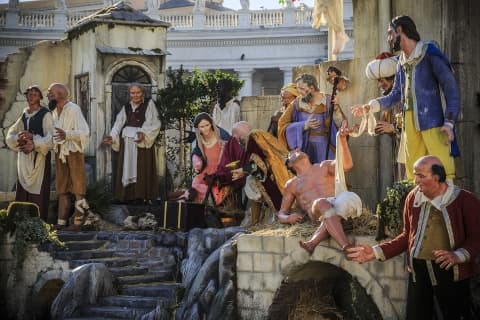
In towns large and small, churches and often city halls layout creche scenes known as presepi, and each venue tries to outdo its neighbors in terms of figurines and accessories.
Naples is where many of these crèche figures are made, and although that chaotic southern city seems to celebrate something all year long, the crowds get thick in the alleys of the neighborhood where artisans make and decorate the crèche figures, with each year bringing new creations often spoofing politicians or honoring the latest sports heroes.
Italy’s Christmas and year-end holidays officially end on Jan. 6, when the Catholic church marks the Feast of the Epiphany, and school kids usually don’t have to resume classes until the next day or two. So many Italians take to the roads during this long break to visit relatives or relax in ski resorts or towns rich in museums and monuments.
There are lots of sweets and more gifts to open by families on Jan. 6 from north to south. Italian tradition holds that youngsters who have behaved will get treats from the Befana, a witch who arrives on a broom. Naughty children will find a lump of coal, so goes the tradition, although no one really loses out, since the coal lumps come in the form of dark-gray candies.
At the Vatican, there are a few more church ceremonies until nearly mid-January, so the Christmas tree and life-sized Nativity Creche scene stay on display in St. Peter's Square long after Christmas trees come down elsewhere.
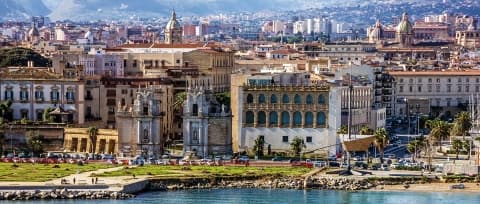
Sicily’s centuries-long legacy of some of history’s most remarkable periods is reflected fittingly in Palermo, the Mediterranean island’s capital city. Phoenician, Carthaginian, Roman, Byzantine, Saracen, Arab, Norman, Spanish, Bourbon -- the list of rulers and conquerors is a long one. Each new wave left its mark on the strategic port city with fine climate, from art to architecture, from language to cuisine, an intriguing mélange of styles, identities, and customs that make Palermo an especially rewarding place to explore.
Palermo emerged from each successive period of history profoundly influenced while adapting to new perspectives. The city is full of striking juxtapositions. Baroque palazzi may be around the corner from mundane apartment buildings still bearing the scars of World War II bombings. Perhaps just as fascinating is Palermo’s latest renewal. Emboldened by young people who refused to grow up as past generations did, accepting as inevitable the sway of local Mafia dons, the city in its few decades has seen stores and cafes rebel against paying ‘’protection money.” Sicily's millennials grow citrus, jar fruit marmalade, and vegetable paté and produce wine and even pasta on fields and orchards confiscated by judicial order from convicted crime bosses.
Feeding off this energy is a cultural revival that has seen art galleries opening in once rundown neighborhoods, family-run trattorias adding vegan and other hip dishes to their menus, young professionals with children in strollers frequenting lively new cafes along a spruced-up waterfront while joggers do laps and sailboats skim the surface of the glistening Mediterranean Sea.
Encouraged by a maverick anti-Mafia mayor, Palermo since the 1980s has been busily reinventing itself as a modern European Mediterranean metropolis. That ambition has paid off, with Palermo being named Italy’s 2018 culture capital. For a city steeped in ancient civilizations, Palermo proudly was chosen to host a biennial of contemporary art. And UNESCO, the U.N. cultural agency, declared the Arab-Norman churches, palazzi, and monuments of the city, along with those of the picturesque coastal town of Cefalu, and Palermo’s ‘’suburb,” protected patrimony of humanity.
The designation pays tribute to the borrowing and appreciation of cultures and religions, during those two artistic and historical periods, a sort of integration whose success is still admired centuries later.
Modern Palermo is dense with churches, museums, cloisters, and other extraordinary artistic sites. But in Sicily, the pace is slow, and there is so much culture to absorb, so why rush? Consider discovering Palermo in all its vibrant colors and stimulating flavors over a few days.
In Palermo’s heart, and within a few blocks of each other, lie several of the city’s star attractions.
Among them is the 12th-century honey-hued, fortified cathedral, a handsome, imposing example of the Sicilian-Norman style, easy to admire from the pleasant, palm-studded square before it. Down the main boulevard is Palazzo dei Normanni, or Palace of the Normans, once the royal residence of ruler Ruggero II. Its interior decorated with exquisite mosaics, the palace is a magnificent structure built for the Norman dynasty by Muslim artisans, with its splendidly and extraordinarily, adorned Palatina Chapel, notable for its frescoed wooden ceiling. Sicily’s Parliament, the legislature of the autonomous region, now makes its home in the palace.
A charming stop a pleasant stroll away is San Giovanni Degli Eremiti, a former hermitage, then mosque which eventually was converted into a Benedictine convent. The five domes covering the church is further evidence of Arab influence on Christian buildings in the city. The church’s cloister and flourishing garden offer a delightful break from Palermo’s noisy, traffic-clogged boulevards.
A very current example of Palermo’s works-in-progress to give makeovers to its storied heritage is the Antonino Salinas Regional Archaeological Museum. The museum recounts the island’s Phoenician, Greek and Roman past. Only partly made over so far, the museum has already become a hit attraction for Palermitani, as the city’s residents are called. Heart of the museum is a soaring, airy exhibition space in one of its courtyards known as Agora’ and decorated with archaeological ruins, including 5th-century-B.C. stone lions’ heads. Many of the artifacts on display were excavated from the ancient temple complex in Selinunte.
Like many vibrant cities, Palermo lives much of its life in its streets. While supermarkets are a reliable convenience at odd hours -- they usually don’t close for lunch as many grocery shops do in Italy, especially in the south -- many Palermitani regularly shop in street markets, often making them part of morning rituals. Catch of the day? The freshest fruit? Many fling open balcony doors or lean out kitchen windows to catch the drift -- the city’s market vendors are famed for their colorful cries, trying to convince you to favor their stalls instead of their rivals.
Palermo has a handful of traditional markets. Vucciria often tops tourists’ lists. Its name is a corruption from the French Boucherie, drawing on the markets centuries-old beginnings as a place to buy meat and live animals, Nearby runs Via dei Maccheronai, which means Pasta Makers Street, its name reflecting a tradition where fresh-made pasta was stretched out to dry. Fish stalls and produce stands sprang up, all making for a whirl of color and movement that inspired work by Renato Guttuso, a 20th-century neorealist Italian painter.
But if you want to shop and stroll where the locals do, then Ballaro’ market is your destination. Palermo’s households pick up their mussels, fresh sardines, produce, cheeses, meats, chicken, spices and items of everyday life like plastic washing basins and mops from Ballaro's multi-ethnic vendors.
Here Palermo’s people outnumber the tourists, and they may come in handy to help translate what the merchants are hawking at the top of their lungs. Produce sellers arrange their cabbages, broccoli, carrots, tomatoes, melons and whatever else the season brings as if they were works of art in a gallery, and in a sense they are. Even the tiniest shop in a run-of-the-mill neighborhood wouldn’t just plop the blood oranges, round, violet eggplants or pale green long squashes in crates to be stacked one atop the other. Instead, they are lovingly arranged to catch the shopper’s eye.
Some of the produce comes in varieties not commonly seen in the States, like purple cauliflower and radicchio resembling peeled-back blossoms. Should you be renting an apartment during your Sicily stay, perhaps cook some of these exotic looking veggies up with pasta or risotto.
But strolling through the market you’ll also have your pick of street food, as an appetizer for that lunch ahead or a lunch-to-munch as you absorb the riot of colors and drink in the aromas.
In Palermo, street food is cherished culinary traditions. The offerings aren’t for the faint-stomached.
Fried food and concoctions based innards like intestines are tasty staples, and they usually aren’t dainty-sized. A local favorite is a sandwich stuffed with boiled spleen and lungs that are then thinly sliced and fried in lard. If that doesn’t sound filling enough, one can request the panino ‘’maritata’’ -- dialect for married -- and the meat will be coupled with shaved cheese, such a Sicilian caciocavallo. Boiled octopus is also popular street fair, especially at Palermo’s seaside suburb of Mondello. Less exotic but no less tasty possibilities for Palermo street food include cazzilli, a kind of potato croquette, and the seemingly omnipresent panelle, fried ceci, or chick peas, wrapped in sesame-seed bread.
But with a whole crop of new Palermo restaurants opening, it seems, weekly as part of the city’s renaissance, it might be wise to save room for dinner
Luciano Pavarotti passionately belted out "Torna a Surriento" for many an audience. But even without the extraordinary tenor talent of the late Italian opera super-star it's easy to become passionate about and inspired by Sorrento, a town perched above the Gulf of Naples at the north with spectacular views of Mount Vesuvius and perfumed by the scent of its orange and lemon trees.
Think of this welcoming town as a virtually one big terrace on the sea, a place that invites lingering and relaxation.
The 19th'-century crowd-pleasing song"s title means "Come back to Sorrento," referring to the town by its name in Neapolitan dialect. Its opening words speak of the its beautiful sea views and how they inspire so much feeling.
Many of those who have visited do return, and even stay.
A sizable community of expats, notably Britons, live full-time or much of the year in Sorrento, appreciating its sweet climate, relaxing vibes, breathtaking panoramas and convenient transportation by boat or bus for day-trips to Positano, Amalfi, Praiano and other sea towns along the Amalfi Coast.
Sorrento also is an easy departure place for day trips to Capri. It's a wonderful base for a getaway to Naples, but after a day's sightseeing in that chaotic metropolis, or a side-trip in fascinating but dusty Pompeii, one can come home to Sorrento for the evening, kick back and drink in the sunset.
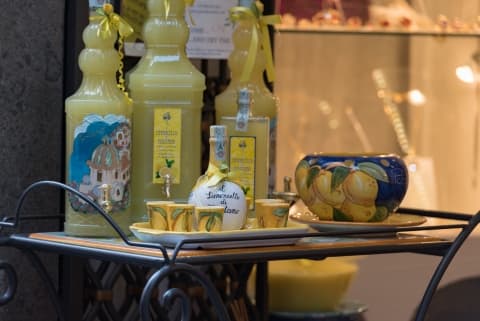
Speaking of drinks, Sorrento's the place to sip a limoncello. The lemons of Sorrento have medium-thick peel and rind and of considerable weight -- one lemon cannot rarely weight a good four ounces. They are prized so much that Italy's agriculture authorities have granted them a special denomination only available to the lemons grown in Sorrento, as well as a few nearby towns on the Sorrento Peninsula and on the island of Capri.
Among the local sweets made with is a "baba' al limone," a twist on the more known "baba' a rhum." Lemons also find their way into delicate fish sauces for pasta.
Stroll down Sorrento's streets and wander into shops selling limoncello in bottles of various shapes and sizes, some looking more like works of arts. Sample a thimble-sized serving before deciding which to buy or to order that night after dinner.
Italians are fiercely proud of their limoncello. Many in the south brew their own, from lemons grown in their own gardens, and families cherish their recipes.
The lure of Sorrento seems timeless. The favorable climate and beautiful setting made it popular with ancient Romans.
Sorrento's beauty is also the stuff of myths, literally. The town is linked to the mythical Sirens, mermaids who, with their sweet song, charmed ancient mariners on ships passing along the coast. Odysseus had himself tied tightly to his ship's mast, so he wouldn't succumb to the Sirens' fatal call.
Today, one can succumb to the seduction of Sorrento's beauty without a care, on lounge chair on an apartment balcony balcony overlooking the sea or at a seaside cafe table. Sorrento’s atmosphere is picturesque and inspirational to the point of poetic. Among the notables who holidayed in the town are Keats and Byron.
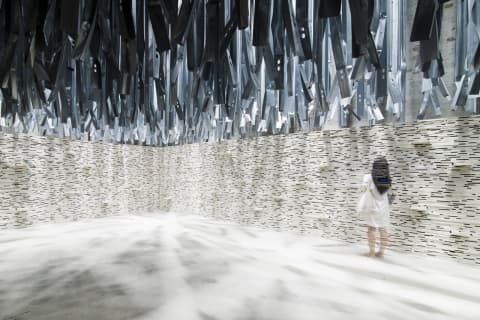
Think contemporary architecture, and images of skyscrapers or bridges or futuristic-looking homes might come to mind. But the curators of Venice's Architecture Biennial, which runs in the lagoon city through November 25, want visitors to imagine another aspect of architecture, which they have made the theme of this exhibit: "free space."
Venice, a work of art in itself, is a big booster of the arts. Every year, in the waning weeks of summer, it hosts a film festival on the Lido, the city's beach island. And every other year, it is home to the Venice Biennial of Art, which focuses on contemporary works.
But it also boasts the Architecture Biennial. Visitors flock from around the world to enjoy it.
This edition, since its opening in late May, has set art critics and the public thinking about "free space." What does this mean in " mean in people's lives? What are its consequences? Does it serve us? Can the places where deliberately there is nothing be considered part of architecture, too?
Dozens of countries and other participants have the equivalent of "pavilions," each giving that nation's unique perspective on the "free space" concept. Some link the concept to people's need for space in an ever-more fragile planet. For others, the theme triggers discussions on what free space can be applied to. Among the musings have been some linking the concept to openness, including to foreigners or immigrants.
One exhibit getting intriguing reviews was assembled by the Vatican. It's a popular one, ingenious, too, since the exhibit is the only one to be held on San Giorgio Maggiore Island, which offers great views of the Grand Canal. The exhibit's architect created a chapel, made of slats coming together at a point at the top, evocative of hands joined in prayer. The exhibit blends in well with the woods on the island, encouraging reflection. It's the first time the Vatican has had an entry in the architecture biennial.
Another first-time participant is Saudia Arabia, which has been grappling with sprawling cities in the kingdom, so "free space" might ve precious there.
Except for the Vatican entry, all the other exhibits are grouped in either the Arsenal (Arsenale) or Gardens (Giardini) areas of Venice, away from the tourist-clogged calle or claustrophia-inducing narrow warren of streets near St. Mark's Square. Shuttle buses take Biennal visitors from four "vaporetti" (boat) stops near the exhibits. The neighborhoods themselves are worthy wandering about. Many tourists never visit these parts of Venice, a kind of "free space" to expand one's concept of Venice beyond St. Mark's Basilica and swank palazzi along the Grand Canal.
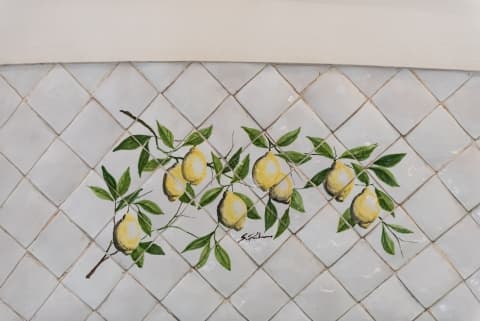
For many Italians, ceramic decorations like vases, bowls, plates and even umbrella holders are a part of their identity. Heirloom pieces are handed down across generations, perhaps even for centuries. Outside front doors or driveway gates, especially in the south, and in tiny towns and islands, you can spy colorful, hand-painted ceramic tiles personalized with an affectionate nickname for the villa, apartment or "villino" (a more modest home). Perhaps adorned with a "girasole" (sunflower), hibiscus, or, if near the sea, the motif of some sea creature, like an octopus. There are even whimsical ceramic tiles with designs of dogs, bearing the caution: "caveat canem."
They're a rough equivalent of a "welcome mat" or, the "welcome to our home" tradition in the Anglo-Saxon world. But in Italy, there are centuries of fierce pride associated with the distinct styles of ceramics. Regions, and even the towns within them, have traditions of decorating ceramics ranging from tableware to public benches in town squares to school playgrounds, with designs proudly inspired by centuries of artistic talent in designing and painting the tiles or objects.
Running until early November 2018 in Pisa is an exhibit, "Pisa, City of Ceramics," with the Tuscan city offering visitors an occasion to linger much longer than just to snap the fun photos of tourists pretending they are holding up the Leaning Tower. Exploring 1,000 years of art and craftsmanship, the ceramics show concentrates on local history and production, with its roots in ceramics that were imported into Pisa by sea from Islamic and Byzantine areas.
Maiolica is a kind of synonym for tile in Italy, and this reflects tiles that had their origin in the Spanish island of Maiorca. Pisan potters started their own production of notable excellence in the 1200s, and were considered the first such potters in Tuscany, which went on to become renowned for ceramics. Some of the items on display date from medieval times and were found in local archaeological digs. The exhibit also suggests "ceramic itineraries" including area churches and towers to admire while in Pisa.
Many Italian cities and towns developed iconic ceramic styles, featuring specific motifs or color combination, and even shapes of vases, bowls or cups. Venice and Florence as well as Urbino, the Renaissance hill town in the Marche region, have reputations for excellent ceramics.
One name frequently associated with highly-in-demand ceramics is Deruta, a town in Umbria. It boasts an ancient and noble tradition of ceramics. Its fame in centuries past was in part due to its location, as well as the beautiful creations of its potters. The town runs along an ancient Roman road that leads to the capital, facilitating transport of goods. The town itself sits on hills rich in clay, so the raw materials of ceramics were right at hand and plentiful. Deruta ceramics over the centuries have wound up in prized private collections of antiques, in museums and many homes. Visitors can flock to its ceramics laboratories, a museum and smaller scale artisan "botteghe," or workshops.
Italy's south also has a vibrant ceramics industry, producing pieces with vivid colors and motifs reflecting the lush flowers and bountiful foods, especially lemons and other citrus and seafood.
Vietri sul Mare, a tiny town flanking either side of the busy road that forms the southern end of the famed Amalfi Drive, features one ceramics shop after another. Some are kitschy but fun, especially for souvenirs. Other shops are high-end, with one-of-a-kind decorative plates more resembling the size of wedding platters, and decorative jars so wide you can't put your arms around them. Most stores will ship the heavier, bulky items to the United States in special protective packaging. Even many lower-priced items can justifiably be called "one-of-a-kind," since they are hand-painted, leaving no two pieces exactly alike. While perhaps an impressive umbrella holder might be too challenging for your carry-on, a set of a few hand-decorated dessert bowls, perfect for serving fresh fruit atop some gelato, Italian style, can make for a different and practical souvenir.
The town's ceramics industry is said to have roots going back to about the 5th century BC, Etruscan times. In Medieval times, the ceramics production was so flourishing, it was a source of wealth for the area. Today, many of the ceramics companies are family-run, and have been in the same families for generations.
Vietri sul Mare has its own style, some three-centuries-old, of "riggiole," baked tiles with delicate illustrations that decorate pillars, stone benches in cloisters, floor and walls in churches, even hospitals. The "riggiole" of Vietri sul Mare are generally subtler and pastel-like in shades compared to those developed in Naples.
Sicily, where nature blessed the land with a riot of colors, also offers opportunities for those eager to see new ceramic styles. Near the delightful sea resort town of Cefalu' is Santo Stefano di Camastra, chock full of ceramic factories that allow you to peak in, browse and buy, as well as smaller artisan shops. Many of their dishes and vases are painted in a flaming red/orange hue, with highlights of turquoise and sapphire shades of blue, reminiscent of fiery sunsets and inviting waters that the Mediterranean island is famed for. Prices vary from souvenir-accessible to high-end, but bargaining is part of the fun, especially if one is buying several pieces.
If your itinerary doesn't take you to any of these ceramic-famed locales, you can deepen your appreciation and knowledge of Italian ceramics with a visit to Rome's National Museum of Palazzo Venezia, specializing in the decorative arts. The museum is often ignored by tourists eager to peer around the palazzo's corner and spy the balcony where Benito Mussolini used to harangue Romans during his Fascist reign.
The museum's collection of ceramics is so rich and numerous, many of the pieces were placed in storerooms for lack of space. Here you can see splendid examples of ceramics from, yes, Deruta, Urbino and its seaside suburb Pesaro, but also Faenza and Montelupo, to name a few other places. Ceramics from Spain and the Netherlands are also on display.
Also featured are Capodimonte pieces, popular in the Naples area, and featuring neoclassic styles which draw decorative inspiration from ancient myths.
Many ceramics-lovers flock to Faenza, a tranquil town of ancient Roman origin, in northeastern Italy, to visit its International Museum of Ceramics.
The museum's collection of ceramics ranges from centuries past to modern pieces by Picasso and Chagall. But its strong point is its examples from the Renaissance, when Faenza had a stellar reputation for artistic production of ceramics. The tradition is very strong today: some 60 "botteghe" produce ceramics, with most of the shops concentrated in the historic center of the town of some 50,000 residents.
One Renaissance artist, after earning a wonderful reputation as a sculptor, enhanced his fame with his ceramics masterpieces, working with glazed terracotta. Among Luca Della Robbia's admirers was Piero de' Medici, of the Florentine art patron family. Della Robbia's works, with his signature white figures on a dreamy blue background, can be seen in many of Florence's churches as well as in the Bargello Museum of sculpture in that art-rich city.
While you may not be able to commission ceramic works like the Medicis did in their day, two or three decorative tiles can fit easily into your suitcase and can make a stunning addition when worked into a backsplash design. Such Italian style isn't readily available at most big-box consumer home projects stores, and your kitchen will be as personalized as the owners of Italian villas who put custom tiles on their terraces or villa doorways.
All worth sampling in the Campania region
Less than an hour north of the chaotic and vibrant metropolis of Naples, Caserta is a more modest, manageable, almost casual place that makes for a convenient base to savor some of Campania's best examples of antiquities, landmarks, and gastronomical delights, like creamy mozzarella di bufala.
The claim to fame of Caserta is the Reggia, a royal palace of more than 1,000 rooms that seem to go on forever, with a "backyard" of extensive gardens that, too, impress for their size. "Italy's Versailles," as this sumptuous palatial estate has been dubbed, is sometimes passed up by foreign tourists focused on exploring Pompeii or perhaps on making an excursion on the Amalfi Drive. But as most Italian schoolchildren who have made the classic class excursion to Caserta can attest, the Reggia is an impressive reminder Italy's experience with royals in centuries past.
The Reggia was conceived as a summer palace for King Charles III of Naples in the mid-18th century, upon a design by Luigi Vanvitelli, a leading architect of his day. So vast was the project that prisoners were put to work on its construction. Half-way built, the villa saw construction come to a temporary halt due to local famine and disease. When eventually the palace was completed, its design was modified, but it is still very impressive.
Strolling through one vast salon after another, each chandelier more dazzling than the one before, and while admiring the frescoed ceilings, it's easy to imagine the balls, theatrical entertainment and receptions that were held there during the reign of Ferdinand IV. Following Italy's unification in the latter 19th century, royals from the Turin-based House of Savoy would journey down from their northern base for relaxing sojourns. The villa was eventually given to the Italian state by Savoy king Victor Emmanuel II. In one of the villa's more dramatic moments, the Reggia served as the scene of the unconditional surrender of German forces in Italy to the Allied forces during World War II.
Tours begin by ascending a sweeping, grandiose staircase that leads to an ample hall, where you can marvel at the beauty of the Palatine chapel, still adorned in marble despite suffering extensive damage during the war.
Among the more fascinating furnishings to be admired in the Reggia are a mahogany bed and roll-top desk (believed to be the first known example of its kind) in what was the bedroom of Francis II. In a hint of the privilege these royals enjoyed in those times, the king's deep, marble bathtub is displayed, complete with taps labeled "calda" and "fredda" (hot and cold). Hot water straight from a tap was an unheard-of luxury then. The soaking tub -- shaped much like the ones now in vogue for stylish master bedrooms -- is decorated with a pair of sculptured lion heads.
When the Savoy royalty came down from the north with their infants, special cradles awaited them. A pair on display includes one studded with bright, smooth coral and the other trimmed with mother-of-pearl and supported by a putti at one end and watched over by a sculptured, sinewy angel at the other end.
Adorning marble-topped tables are examples of a style of ceramic vases and bowls many Neapolitans prize for their homes down to this day -- the ornate, exquisite capodimonte style. One elaborate example of this style in the villa is shaped like a concoction topped by a ceramic pineapple with blue stalks, a corn cob, artichoke and melon, even olives and nuts among the piece's other decorations.
From many of the rooms can be spied inviting glimpses of the seemingly endless lawn outside the palace, where visitors can leisurely stroll. But heading toward the villa's exit, tourists pass by an exhibition of creche scenes known as presepi, where in the Naples area has been raised to a popular art form in the last centuries. Among the finely detailed creche figures are impressive "bufali", the dark, hulking size animals with horns that lend their name to the area's prized mozzarella.
The gardens are vast. For a modest fee, visitors who prefer not to walk can take a mini-bus to explore the wooded areas flanking the manicured lawns and also be driven down to a 250-foot-high waterfall at the far end, roughly a two-mile distance. Fountains adorned with mythical images, including hunting scenes, liven the outdoors.
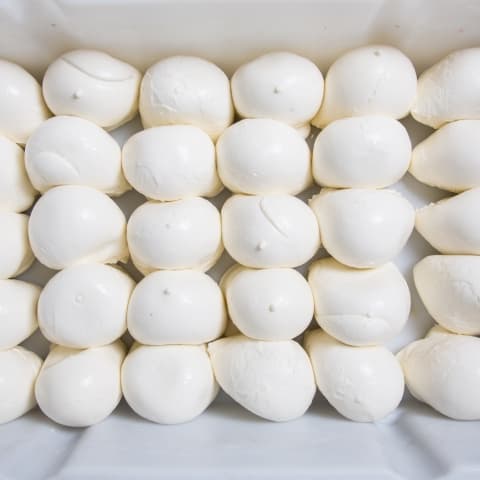
Pizza "margherita" style is a classic version of the pie throughout Italy. Said to be invented in Naples in the late 1880s, the pie was named after the Savoy's Queen Margherita, and features tomato sauce, basil leaves and mozzarella -- evoking the red, green and white colors of the Italian flag -- atop a baked, thin and crispy crust. Caserta's pizzerias and trattorie serve that classic, of course, but you can find an option called pizza "regina." In Italian, "regina" means queen, and since the queen of all mozzarella come from carefully bred bufale (female buffaloes) this pizza is rigorously made with only mozzarella di bufala, for a richer, creamier topping.
Along less trafficked roads in several parts of Campania are bufali ranches, where these animals roam and come right up to the fence. The smaller ranches are often family operations and serve meals built around mozzarella or have roadside stands with the milky cheese kept in liquid in transparent plastic bags or tubs, for sampling and purchase in all their shapes -- tiny round balls known as "ciliegine" or cherries and "treccia," braided cheese are among the favorites.
Head farther inland in Campania, and the menus change with the fauna. Wild boar (cinghiale) is served up in various ways in the Benevento area, with family-run trattorias offering about as many dishes made from the commonly hunted animal as they have tables to seat diners: perhaps in an antipasto mixed with pork sausages or cooked till it almost flakes apart in hearty sauces for pasta or as a "secondo" (main course).
Townspeople in Benevento are eager to welcome tourists who appreciate the ancient Arch of Trajan, considered by some to be the finest triumphal arch in Italy outside of Rome. The arch spans the "queen of roads," the Appian Way (Via Appia) and honors the Roman emperor who expanded Rome's imperial reach to far-off provinces. The arch was built to celebrate the inauguration of the road, which stretched from Rome to Brindisi, a port on the "heel" of the Italian peninsula jutting into the Adriatic Sea. As does the towering Trajan's Column in Rome, this arch is rich in bas reliefs, illustrating the emperor's feats and importance for the empire's inhabitants. Running around the sides of the arch is a frieze, recalling a triumphal procession.
Off the beaten path today, Benevento enjoyed a few heydays. It was a Roman colony, then rebounded after centuries of decline, enjoying in the 6th century the distinction of being the first important duchy of distant Lombardy, with the arch serving as the city's gate. Benevento preserved its proud autonomy for five centuries, till it became controlled by the church. The arch survived a powerful earthquake in 1688, and, covered with sandbags, was protected from World War II bombings. But the bombs damaged the city's Romanesque cathedral from the 13th century. The bell tower survived. There are also the remains of an ancient Roman theater, big enough to hold 20,000 people.
Campania abounds in history.
The town of Santa Maria Capua Vetere has its roots in an Etruscan city known as Capua. Hannibal's forces passed through its gates, and archaeologists have found signs of a military camp believed to have been used by Carthaginian troops. Another name with cachet in Capua's ancient times is Spartacus. Capua's arena was the venue for the revolt sparked by the gladiator in 73 B.C. Outside the modern-day town is the Roman amphitheater, dating from the 1st century and, after Rome's Colosseum, ranks as the second-largest such arena. Only two of what was once 80 arches still stand, as the arena's stones were carted away for building material -- a common habit of those times -- over the centuries.
A client recently asked me to organize a full day tour of gardens in Florence and in the immediate countryside. As a botany enthusiast, she wanted to discover the particular style of the “giardino italiano” or Italian garden and the differences between gardens in the city and those of villas in the surrounding countryside. Mixing in a little Florentine history, we designed a tour comprising two gardens that were owned by Cosimo de Medici and designed by Niccolò Tribolo, a Renaissance artist in the service of the powerful duke.
In 1538, Tribolo designed gardens for the Villa Medici al Castello, owned by the Medici family since 1477, just a few miles from Florence. The gardens represent one of the first and best-preserved Italian gardens in history. Situated at the rear of the villa, the original garden showed a simple and geometric design on three stepped terraces enclosed within high perimeter walls and laid out along a main central axis. The first terrace, presents 16 square flower beds with a central stepped pool adorned with Bartolomeo Ammannati's statue of Hercules and Antaeus.
500 rare plants fill the second terrace where one can also view the Cave of the Animals, famous for its sculptured fountains in the form of animals of many species that spray fountain water. The tour continues on to 2 small secret gardens, one on either side that recall the enclosed structures of medieval gardens.
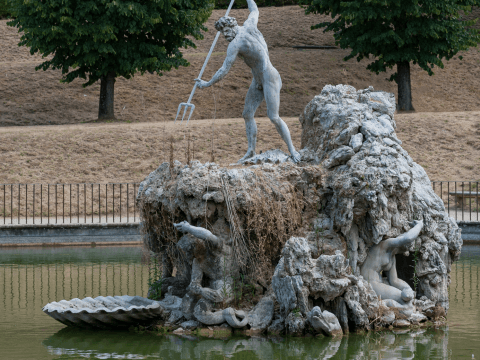
Some 10 years later, inspired by the beauty of the garden, Tribolo created the more famous Boboli Garden for Cosimo and his wife, Eleonora di Toledo, as part of the Pitti Palace, the main seat of the Medici grand dukes in Florence. Unconventional for its time, and irrigated by a complex system originating in the Arno, the gardens are open and expansive with an emphasis on views of Florence. Graced by an amphitheater, grottos, nympheums and miniature temples, the gardens are a veritable open-air museum with dozens of sculptures hidden amongst the plants and fountains, such as the Fountain of Neptune. The mix of plants, flowers, grottoes, lemon trees and sculptures offer a quiet respite in a bustling city and breathtaking views of the countryside.
Buonarroti palazzo in Florence is home to some Michelangelo gems many won't see.
If you're feeling it's time for a bit of a break from Florence's stellar galleries of artistic treasures by Renaissance master painters and sculptors, consider seeing just one more museum. That's right, one more -- as long as it's among the Tuscan city's tinier museums, which are too often overlooked in tourists' packed itineraries but inspire without overwhelming.
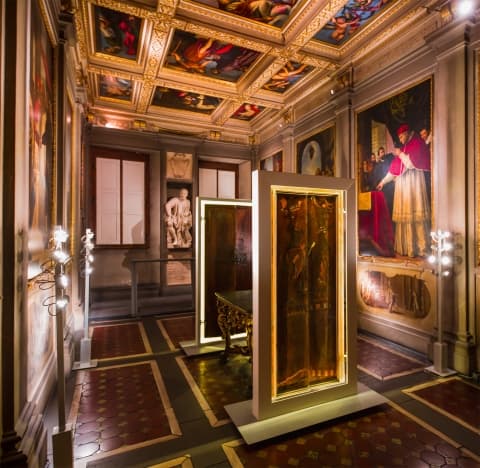
One such tiny but brilliant star in Florence's firmament of Renaissance wonders is Casa Buonarroti, a 17th century palazzo near Santa Croce Basilica that Michelangelo Buonarroti's heirs turned into a homage to the artist in the century after his death. The foundation that runs Casa Buonarroti (Buonarroti House) describes it as a "museum and monument, place of memory and celebration of Michelangelo's genius." The description is no exaggeration.
Walking through the two stories of the compact palazzo that are open to the public, visitors can see Michelangelo sculptures, including a marvelous celebration of an entwined pair of two well-muscled bodies, "Due Lottatori" (Two Wrestlers), as well as stone carvings like his dynamic, intense "Battle of the Centaurs."
But even more precious is the opportunity to admire some of the artist's sketches. Michelangelo's perfectionist pride caused him to burn many of his sketches and illustrations before dying in Rome in 1564, according to the chronicler of artists' lives, Giorgio Vasari. True or not, relatively few of Michelangelo sketches -- masterpieces in themselves -- survive, despite his long and prolific artist production. At one point his nephew, Leonardo, paid handsomely to buy what he could find of the sketches on the Roman art market.
Later, family descendants took to framing some of the designs and displaying them in what would become known as Casa Buonarroti, but that left the sketches ripe for damage. A few decades ago, the Uffizi Galleries retrieved them and restored them before returning them to Casa Buonarotti, which now puts a few of their 205 sketches in its possession on display on a rotating basis. Seeing the "sketches of the day" is worth a visit in itself.
As befitting a tribute to one of the world's greatest artists, Michelangelo's descendants engaged some of the best artists working in Florence to decorate the drawing rooms. Among those executing a series of painted panels in the main rooms' ceiling are Pietro da Cortona and Artemisia Gentileschi, a rare female painter to achieve acclaim in her times.
"The Lake of Dreams." "The Looking Glass of Venus." "The Coast of the Divas."
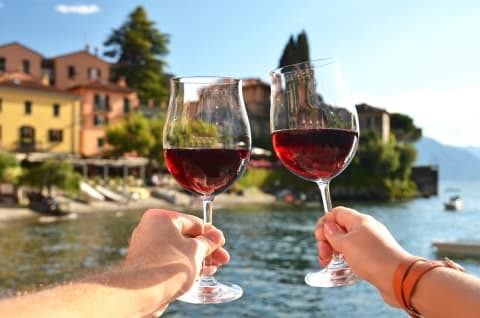
Accolades abound for Lake Como, whose deep blue waters are ringed by steep hills that are studded with flower-bedecked villas and terraced citrus groves. And just beyond it all lie snow-blanketed foothills of the Swiss Alps.
The lake in northern Italy is shaped like an upside-down Y. Think of it more like a divining rod. The lake can lead you to discover just about anything you want on holiday -- from a lakeside patio at romantic yet elegant hotels to charming views from bucolic lanes in sleepy, tiny villages clinging to hillsides.
There are towns and addresses that attract movers-and-shakers in finance, industry and politics. Late summer sees an annual think-tank like retreat for VIPs in the town of Cernobbio, as they take their afternoon coffee along the fabulous lakeside promenade and dissect the world's more pressing issues.
Other town's names exude beauty, like Bellaggio, where bougainvillea, wisteria and other sensuous plants tumble like floral blankets over balconies from posh lodges or send out their enticing perfumes from behind the walls that rim centuries-old private villas.
It's all a bit reminiscent of the breathtaking panorama travelers seek on the Amalfi Coast. But instead of a crazily-trafficked highway running through the heart of town, as it does on the daredevil Amalfi highway coast road, much of the traveling to reach Bellaggio and other holiday destinations on the lake is by soothing boat.
Life is calm here, and even tourist spots have a soothing, relaxing atmosphere.
Like the proverbial fork in the road, the fork-shaped lake lends itself to two basic choices -- explore Lake Como by boat, or motor between the towns by car.
The first is recommendable, either for a day trip to "sample" some of the famous stops one can make on the boat runs, or for a longer stay at one town, using it as a base for different excursions by ferry to explore Lake Como's delights.
Bellaggio is prime choice for its estates with manicured gardens, like the 200-plus-year-old Villa Melzi, whose spring-blooming azaleas delight visitors. Also renowned for its gardens in Bellaggio is Villa Serbelloni. Lodging ranges from posh and lavish hotels with cafe tables on terraces to more rustic "pensioni" up in the hills, with simple home cooking but simply fabulous views.
There always seems to be a crowd at Bellaggio's dock when the ferry boats dock to bring the next round of visitors. But duck away from the action to scamper up streets that are really staircases to sample the town's laid-back charm.
Just north of Como, where one fork of the lake begins is another sought-after destination, Cernobbio, whose fabled Villa d'Este dates back to the 16th century. Built by an Italian cardinal, the villa later morphed into the haunt of European royalty and nobility set.
Other shore-side resort possibilities are Tremezzo and Villa Carlotta.
But Lake Como's riches don't have to be pricey. Much of the lake's charming, slow-flowing pace awaits those who take to the lakeside boats known as "battelli' that glide up and down and across the lake, stopping at hamlets with docks barely wide. Dockside, locals send off departing relatives -- maybe even just for a few hours -- with warm hugs or disembark with grocery bags filled at markets in larger towns along the route.
The sun on the boats can be strong, so bring a broad-brimmed hat and a sense of adventure as you journey on these boats. Perhaps you might consider hopping off when you see a tiny, pebble beach with only a few local families sunning. And there, almost surely, a home-style trattoria to try in each small town. Or just to stretch your legs, try exploring picturesque villages nestled near the lake, like that of Torno, or pick a destination just because it has a funky-sounding name, like Onno.
For those wanting to be above it all, go by bike. Cycling enthusiasts -- on racer bikes or mountain models -- from northern Italy take to the hills ringing the lakes on weekends, enjoying the fresh air, scenic views and rests in strategically placed refuges. Cows are grazed at levels as high as 1,000 meters (roughly nearly two-thirds a mile high), and the cheeses made from this "high-altitude" cows are famed for their fresh taste and can be found in local shops and on restaurant menus.
Lake Como's two “forks" each have their own distinct personality, just like the two small cities that are at the "base" of each fork.
The town of Como is more popular with foreign tourists. Its lakeside promenade makes for a relaxing stroll, and Como town boasts a funicular rail car that rises to a panoramic viewing point known as Brunate. The town itself, just about from the days following Marco Polo's explorations across Asia, has centuries of tradition in the silk industry. And while you won't see silkworms in Como, the town is still much involved in silk designs for fashion. Many of the shops in Bellaggio and other tourist points along the lake feature scarves, lingerie and other silk products.
Lake Como's other "fork" touches down in the town of Lecco, not well known on the international travel map. But for Italians, Lecco has a sentimental tug. It is associated with the Italian novel just about every Italian schoolchild reads in middle school: "I Promessi Sposi" ("The Betrothed"), where the lake and the locals' daily interaction with it form poetic and romantic backdrops for the story.
Among those appreciating the best of both worlds -- luxury and simplicity -- is George Clooney. The U.S. movie director and actor bought a handsome lakeside villa in the sleepy town of Laglio. When his Hollywood pals were in town, Clooney ferried them by motorboat from his private dock to dinners in trattorie across the lake. But he also rode his bike around town and shot some baskets with locals on the neighborhood court. The townsfolk, used to welcoming VIPs for ages, take Clooney's presence among them all in stride.
Clooney enjoys the Lake Como area's cuisine while in residence, and, you should, too. It is a hearty one with typical dishes, many, not surprisingly, based on what locally cast fishing nets catch. In Italy, there's a pairing of ingredients dubbed "mare e monti," literally, sea and mountains, and dishes like pasta or risotto often feature sea food and mushrooms.
In this area, with no sea but instead a lake, the pairing is referred to as "acqua e monti." The mountain part often means those fresh local cheeses from choice herds of cows grazing high in the hills; the water part usually means commonly caught fish, like "pesce persico." The fish is often served with rice (and not risotto). Still another favorite fish here is the "agone," a fish caught in summer, salted and laid out in the sun to dry. Dried, the fish is wrapped in laurel leaves, kept in a wooden or tin box and lasts for months.
Still another popular fish is "missoltini" -- fish sprinkled with vinegar and thrown on a grill and served up with polenta.
Even polenta, a substantial staple in many homes in the north, has its Lake Como version here, known by the curious-sounding name "toc." This polenta is a rich one, generously fortified with locally produced cheeses and butter. Popular in Bellaggio, "toc" derives from "toccare," to touch, in Italian. Thee name's origins refer to the tradition of scooping up the polenta with one's hands. Even posh Bellaggio has its earthy dish.
For excellence in fresco art, Padua, one of the country's most ancient cities, will enthrall and enrich its visitors.
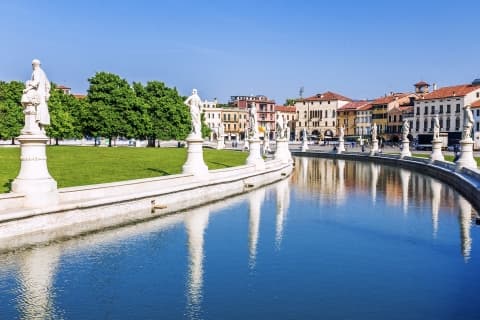
Called Padova in Italian, Padua, tucked around a wandering canal, is easily reached from Venice. A good deal of its artistic development -- and cuisine -- shares much in common with the much more explored lagoon city, but on its own, Padua deserves a day or two of exploration.
Giotto, a giant of Italian fresco painting, is celebrated in good part for his work in two towns. One is Assisi, where he decorated that Umbrian town's basilica named after its native St. Francis. The other is Padua, where his artistry in the Scrovegni Chapel is considered a masterpiece of 14th century Italian and European painting.
So popular is the chapel's frescoes, and so precious is its painting, that visitors are allowed only to stay inside for tightly controlled times: 15 minutes generally in Italy's busier tourist seasons and 20 minutes in “off-season" or other times considered less in demand.
The chapel is small, and the frescoes so marvelous that if oohing-and-ahhing time weren't limited, most people wouldn't be able to crowd inside the aisle where visitors can stand and admire Giotto's genius and be dazzled by the predominant, dreamy blue hue.
Giotto's masterpiece is considered the most complete cycle of frescoes that the Tuscan artist did, and the chapel was his to do at the height of his artistic maturity.
The frescoes are a stunning complement to the chapel's simple, rectangular architecture with barrel-vaulted ceiling. The upper cycles narrate religious scenes; beneath them run illustrations of Vices and Virtues.
The chapel was the wish of a wealthy banker and businessman from Padua, Enrico Scrovegni. He commissioned it to host his remains and those of his descendants after death.
All that gaping lets out a lot of breath, which can damage the ancient frescoes, which were painstaking restored and later reopened to the public in 2001. Reservations are mandatory -- no same-day, spur-of-the moment tickets are sold -- so that the number of visitors can be strictly controlled. In warmer months, evening viewing is also allowed, expanding the number of tickets that can be sold.
For those looking for "special admission,” the date to keep in mind is March 25, when the Catholic church marks the Feast of the Annunciation. Since the chapel was dedicated to the Annunciation, that day admission costs a token 1 euro.
But just touring the Scrovegni chapel without taking in at least some of Padua's several other frescoed masterpieces would be akin to a tourist's making a mad dash to admire Michelangelo's frescoes in the Sistine Chapel and rushing right past such artistic glories like Raphael's work in the Vatican Museums.
To fully appreciate the depth and importance of Padua's contributions to European art, try to carve out some time to visit other landmarks.
Consider making the Oratory of St. George your next stop.
This tiny chapel's origins are similar to that of the Scrovegni Chapel. A military commander, Raimondino Lupi, commissioned a funerary chapel near St. Anthony's Basilica in 1377. He entrusted its decoration to an artist from Verona, another town in the Veneto region. The artist, Altichiero da Zevio, whose formation was steeped in Giotto's style of a couple of generations earlier.
Seeing his work gives a sense of how Italian art was moving toward the Renaissance achievements that would stun the art world later in the next century. In illustrating the deeds of St. George, Altichiero's style exhibits a kind of almost photographic realism.
Featured in the frescoes is the figure of literary giant Petrarch, in this view, swathed in a chocolate brown hood and mantle as he observes the saint baptizing a king.
Here, the oratory frescoes offer a dynamic of artistic movement. Emotions are vividly captured, as well as what was then a risqué naked figure of St. Lucy, as her detractors prepare a vat of boiling oil.
Critics consider Altichiero a talented innovator whose artistic intuitions were virtually a century ahead of his time.
Noontime is advised as a good time to visit the oratory, because the slant of the light entering the nave at that hour helps reveal many details of the frescoes.
Many associate Padua with St. Anthony, and the town basilica named after him was started in 1232 as a temple for his tomb. A wonder of architecture, the sprawling complex features six domes in the Byzantine style, a central dome, and two bell towers that have been likened to minarets.
While frescoes often define Padua art for the visitor, sculpture is a highlight, too.
Donatello's artistic vision can be admired in the vast Piazza del Santo (the Saint's Square) in front of the basilica, where his equestrian statue of a Venetian military commander has been described as the first great bronze sculpture cast in the Renaissance. Inside the basilica, an impressive altar is the work of Donatello, too.
Besides art and architecture, Padua boasts other points of pride. Its university, with its famed medical school, was established in the town in 1222.
Padua is part of the northeast Veneto region, which has some wonderful white wines and a cuisine that is often hearty, with dishes like polenta or rice, and several recipes making use of onions, beans, liver, fresh sardines, cod or maybe tripe.